
HOME ORGANIZATION
A Small Entryway That Works Every Day
Give keys, bags, shoes, and everyday belongings a clear home—even when your entrance is small.
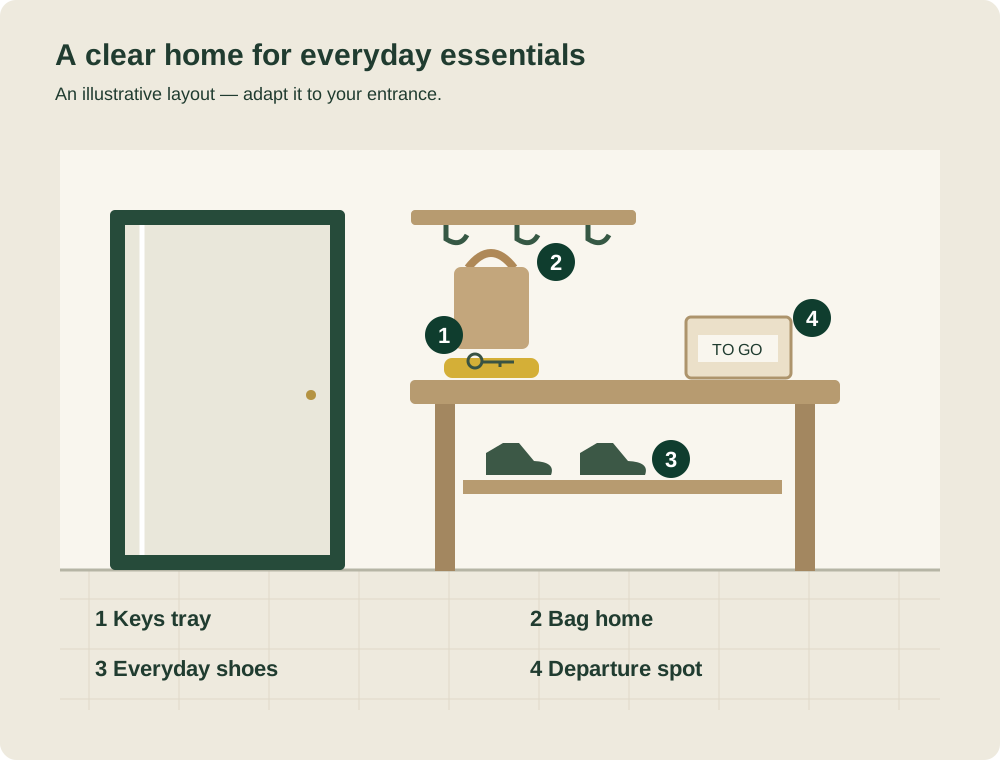
1. Begin with your daily arrival
Walk through what happens when you come home. Where do you put your keys? Where does your bag land? Which shoes stay by the door? These small habits show what the entrance needs to support. Focus on the belongings you use most days, rather than everything that could possibly fit there.
Choose one manageable starting point: the shoes on the floor, the objects on a console, or the bags behind the door. Clear that area and decide what belongs there before introducing another container.
2. Give each everyday item one home
Set aside a small tray or bowl for keys and other small essentials. Keep it where you naturally reach when entering or leaving. A container you already own is enough to try the arrangement. If it collects unrelated objects, reduce what you allow in it.
Choose a defined place for bags and outerwear. Leave space to open doors comfortably and move through the entrance without stepping around belongings. Before installing hooks or shelves, check the manufacturer’s mounting instructions and load limits.
3. Set a realistic limit for shoes
Keep the pairs you currently wear near the entrance and store occasional-use pairs elsewhere. The right limit depends on your household and the space available. Try assigning each person one section of the existing rack or mat so that everyone can see when it is full.
Allow wet footwear to dry according to its care instructions before putting it into enclosed storage. Use a suitable mat or tray to contain ordinary dirt, and clean the area as needed. Avoid adding a deep row of shoes that makes the back pairs difficult to reach.
4. Create a place for things leaving the house
A library book, a parcel to return, or a borrowed item needs a temporary home. Choose a small, visible departure spot separate from the keys tray. Add a short note if the item has a deadline. Once it leaves the house, that spot should be empty again.
Keep this area deliberately small. If it becomes a permanent storage shelf, review the items and decide which still have a real next action. Give belongings without an upcoming trip a different home.
5. Use a short reset
At the end of a busy day, return keys to their tray, place shoes in their assigned section, and move unrelated items out of the entrance. A brief reset works best when the arrangement is easy enough for everyone to follow.
Try the setup for a week. Notice which item repeatedly lands elsewhere and adjust its assigned place. An attractive entrance can still be practical: a clear surface, a few well-chosen containers, and room to move often do more than a collection of matching accessories.