
THOUGHTFUL HOME PROJECTS
Before You Buy Storage: A Practical Planning Guide
Measure, sort, and try a simple arrangement before choosing another bin, rack, or shelf.
1. Name the problem you want to solve
Start with a specific sentence: “I cannot find the garden gloves,” or “The bags cover the workbench.” A clear problem makes it easier to judge whether a storage product will help. “More storage” alone does not tell you which belongings need a home or how you will use it.
Decide what success would look like in everyday use. You might want to reach a tool without moving three boxes, keep a surface clear, or return supplies to one labelled shelf. Write down that goal before browsing products.
2. Sort before you measure
Gather the belongings that will use the space. Separate frequently used items from occasional-use items, duplicates, and things that belong somewhere else. Decide what you are keeping before planning around its size.
Group items by the task they support. Gardening hand tools may need a portable container, while pots may work better on an accessible shelf. One large bin can hide the differences between these needs.
3. Measure access as well as capacity
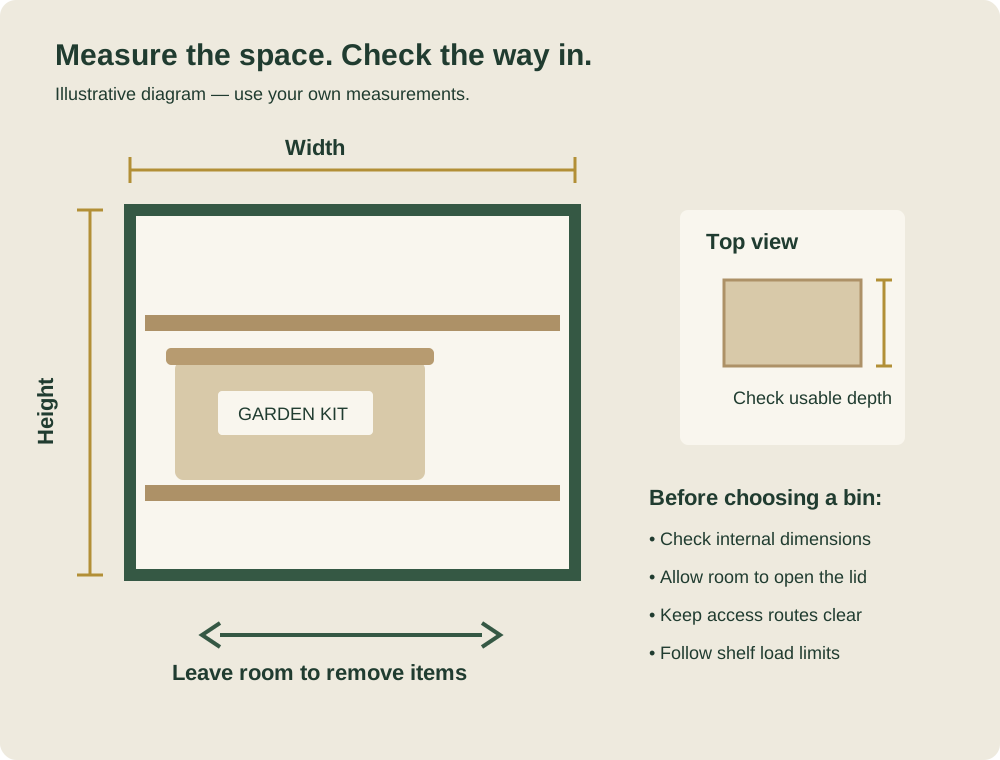
Record the usable width, depth, and height of the area. Check door openings, nearby furniture, and the space needed to remove an item. A container that fits on a shelf may still be awkward if its lid cannot open there.
Measure the belongings too. Check the internal dimensions of containers rather than relying only on their external size. For shelves, racks, or wall-mounted products, follow the manufacturer’s installation requirements and load limits. Leave access routes clear.
4. Try an arrangement with what you own
Use an existing box, tray, or shelf section to test your idea. A temporary handwritten label is useful while you are deciding where things belong. Try taking items out and putting them away during an ordinary task.
Notice the friction. If the container is too heavy to move comfortably, the label is hard to see, or the lid slows every return, adjust the arrangement. This trial gives you a more useful shopping list than choosing containers by appearance alone.
5. Compare the complete setup
When you are ready to buy, list the features that matter: usable dimensions, ease of access, suitable materials, and compatibility with the intended location. Check whether necessary brackets or other parts are included. Review care instructions and the seller’s return terms before ordering.
Consider how the storage will be maintained. Clear containers may make contents visible; opaque ones may create a calmer-looking shelf. Neither choice replaces a sensible grouping system. Pick the option that helps your household find and return belongings.
6. Write a short shopping brief
Your brief can be as simple as: “One container for the everyday gardening kit; fits the measured shelf; easy to carry; no extra pieces needed.” Bring your measurements with you and compare each candidate against the same requirements.
After setting up the storage, try it in daily use before adding more. Keep a little room for returning items and revisit any area that becomes difficult to maintain. The aim is a useful system, one thoughtful purchase at a time.