
Home & Garden
How to Organize Garden Tools for Everyday Use
A simple arrangement that makes gardening easier to start—and easier to tidy up afterward.
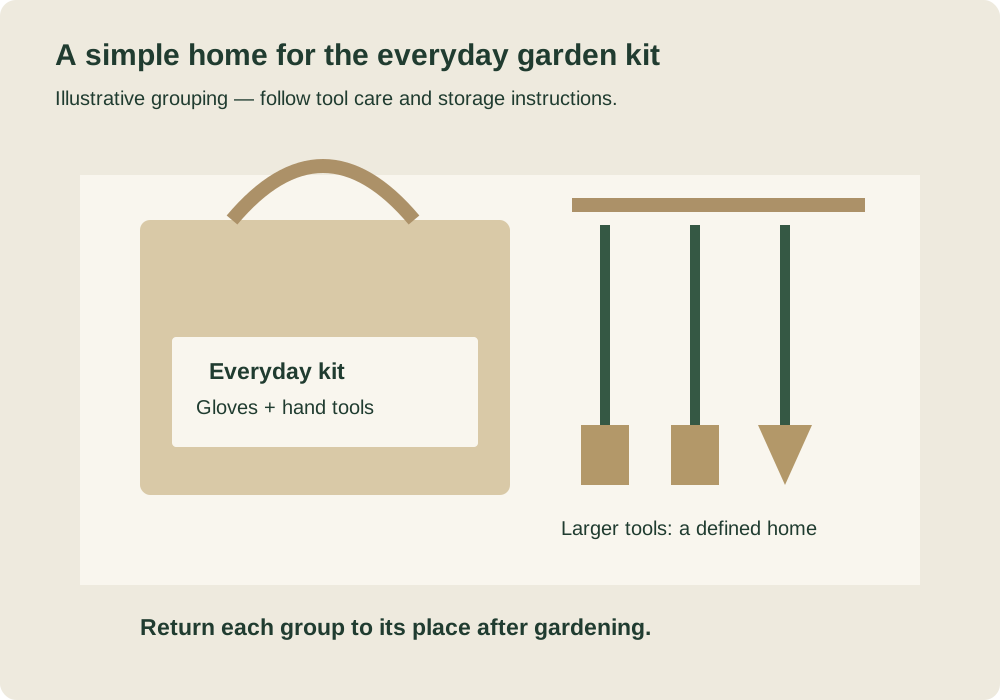
A useful garden tool area begins with the work you do most often. You might need a convenient place for a watering can, hand tools, gloves, and pots, while larger seasonal equipment needs a different home. Start with one shelf or corner, and build an arrangement you can maintain after an ordinary afternoon outdoors.
1. Gather and review what you own
Bring together the tools you use for the same tasks. Separate hand tools, long-handled tools, watering equipment, planting supplies, and items waiting for repair. Set aside duplicates you rarely use. Before choosing new storage, check which belongings actually need a permanent place in this area.
Clean tools according to their manufacturer’s instructions and allow them to dry before putting them away. An organized space is easier to maintain when you can see the condition of the items in it.
2. Make everyday tools easy to reach
Keep your regular gardening kit together: gloves, a hand trowel, and the other tools you use most often. A container you already own may work well as a portable kit. Choose one that is easy to carry and has room for the tools without overcrowding them.
Give the kit a clear home near your usual route to the garden. Keep access routes and door openings clear. Store sharp tools securely, following their instructions, and out of children’s reach.
3. Give larger tools a defined space
Measure the available wall or floor area before deciding where long-handled tools will go. Allow enough clearance to remove a tool without knocking into neighbouring items. Avoid arrangements that make you move several objects every time you need one.
If you choose hooks, racks, or shelves, check the manufacturer’s load limits, mounting requirements, and suitability for the wall. Follow the installation instructions. A clear, accessible arrangement matters more than filling every available space.
4. Separate tools from garden products
Keep fertilizers, pesticides, fuels, and other garden products in their original labelled containers and follow the storage directions on each label. A tidy appearance should never replace the instructions for the product. Do not transfer products into unlabelled containers to make a shelf look more uniform.
Group pots, labels, and other ordinary planting supplies separately so you can find them without searching through unrelated products.
5. Leave room for the season ahead
Before the next season, bring frequently used equipment into convenient positions and move occasional-use items farther back. Leave a little spare space for supplies that return from the garden. Short labels such as “Hand tools,” “Watering,” and “Pots” help everyone understand where things belong.
Your first garden tool reset
Choose one area, remove the items that do not belong, and arrange the tools you use most often. Try the setup during your next gardening session before buying more storage. If a tool repeatedly ends up on the floor or bench, reconsider its assigned place. The goal is a system that makes both starting and finishing your work feel straightforward.