
Organization
How to Organize Your Garage, Step by Step
A practical starting point for a cleaner garage—and a system you can keep using.
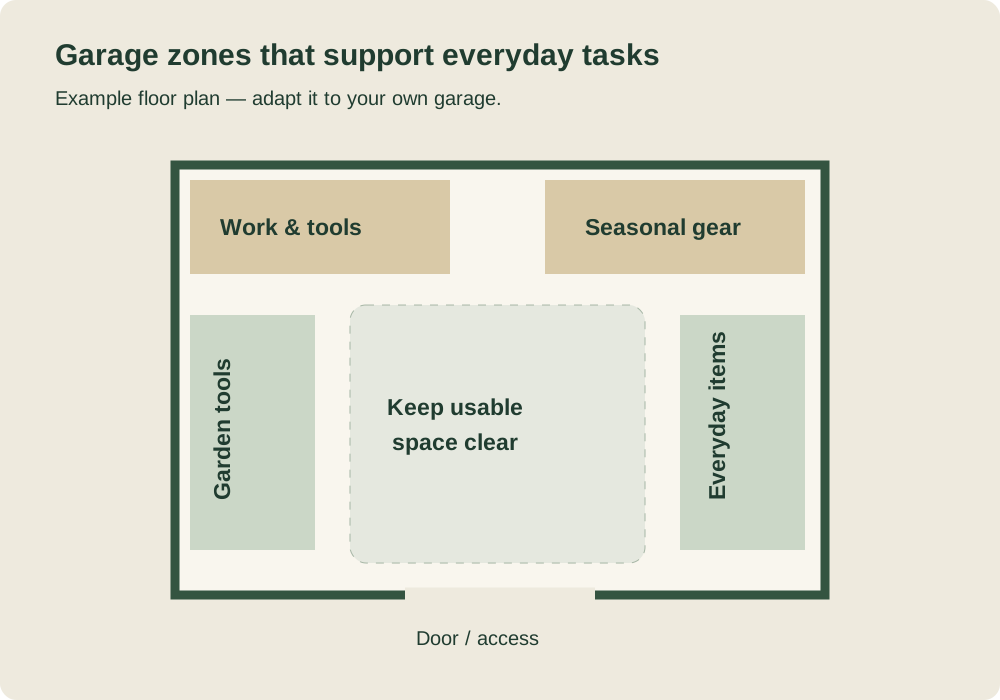
A well-organized garage does more than look tidy. It makes everyday items easier to find and gives tools, outdoor gear, and seasonal belongings a clear place to return to.
You do not need matching containers or an expensive storage system to begin. Start with what you own, work on one manageable area, and buy storage only after you know what needs a home.
1. Decide What Your Garage Needs to Do
Before moving anything, list the main ways you use the space. You might need room for a vehicle, a workbench, bicycles, gardening supplies, or seasonal storage.
Choose your priorities. If parking is essential, protect that space first—including room to open doors and walk around the vehicle.
Your first task: write one sentence describing what you want to improve. For example: “I want to park comfortably and find my everyday tools without searching.”
2. Start With One Small Area
Choose a shelf, a corner, or the workbench. Avoid emptying the entire garage unless you have enough time and space to finish.
Sort the items in that area into four groups:
- Keep here: belongings you use in the garage or outdoors.
- Move elsewhere: items that belong in another part of the home.
- Donate or sell: usable things you no longer need.
- Dispose of appropriately: broken or unwanted items.
Set uncertain items aside for a second review. A small, finished area is more useful than a large sorting project left halfway through.
3. Group Similar Items
Bring related belongings together so you can see what you have before choosing storage.
Useful categories include:
- Everyday hand tools.
- Gardening supplies.
- Sports and outdoor equipment.
- Cleaning supplies.
- Seasonal decorations and gear.
Keep categories broad enough to be easy to remember. A label such as “Bike accessories” is usually more useful than several tiny categories that take effort to maintain.
4. Create Simple Storage Zones
Give each category a location that fits how often you use it.
Keep frequently used items easy to reach. Place occasional-use belongings farther from your main working area, while keeping access routes clear.
Think about the order of your everyday activities. If you usually collect gardening supplies before heading outside, storing them together near the appropriate exit may make that routine easier.
Leave enough space to use doors, reach stored items, and move comfortably.
5. Measure Before Buying Storage
Once you know what you are keeping, measure the available width, depth, and height. Include clearance for doors, drawers, and the vehicle.
Try rearranging your existing shelves and containers first. You may need fewer new pieces than you expected.
When comparing storage options, check dimensions, manufacturer load limits, installation requirements, and accessibility. Follow the manufacturer’s instructions for assembly and mounting.
Choose storage that suits your belongings rather than buying a complete system simply because it looks attractive.
6. Label Clearly and Leave Room to Grow
Use short, readable labels such as “Garden tools,” “Camping gear,” or “Winter accessories.”
For containers with mixed contents, add a brief list where you can see it. Keep labels facing outward so you do not have to move several containers to find the right one.
Avoid filling every shelf completely. A little spare space makes it easier to put things away and accommodate changes.
7. Make Tidying Part of the Routine
The best system is one you can maintain on a busy day.
After a project, return tools and supplies to their assigned places. If something repeatedly ends up on the floor or workbench, reconsider its storage location.
Before changing seasons, review the categories you will use next. Move everyday seasonal gear into convenient positions and put less-used items away.
Your First Garage Reset
Choose one area and complete these five tasks:
- Decide what that area is for.
- Remove items that do not belong there.
- Group what remains.
- Assign each group a clear location.
- Label the storage and leave a little spare room.
A useful garage does not have to be perfect. It needs to make everyday life easier—and make putting things away feel straightforward.