
Canadian seasonal garage storage
Snowblower Storage in Canada: A Practical Seasonal Guide
Plan a useful winter parking spot and an off-season routine. Gas and battery machines need different preparation, even when they share the same garage.
Reviewed October 4, 2026 · Manufacturer guidance and practical space planning.
1. Plan the footprint and the route
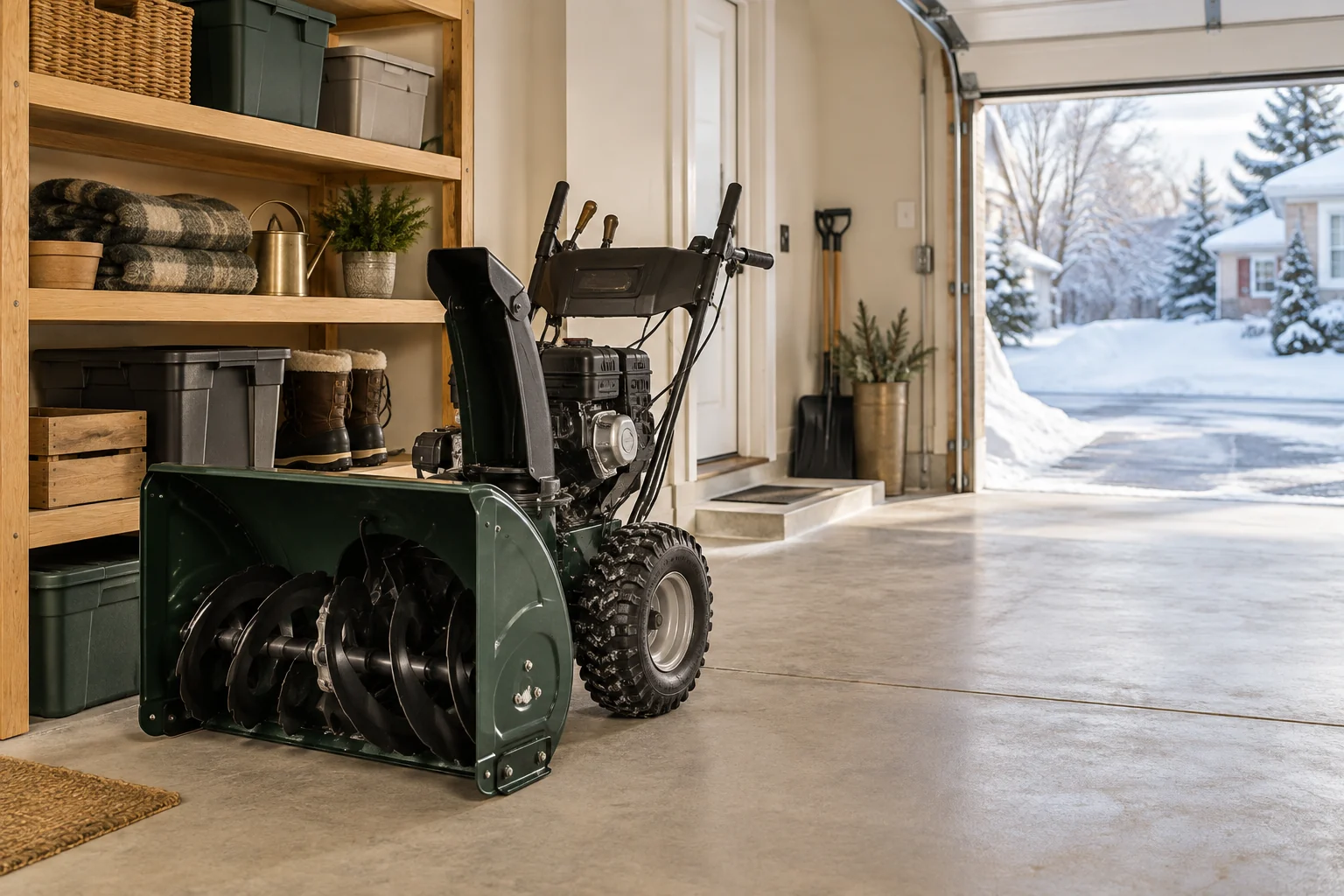
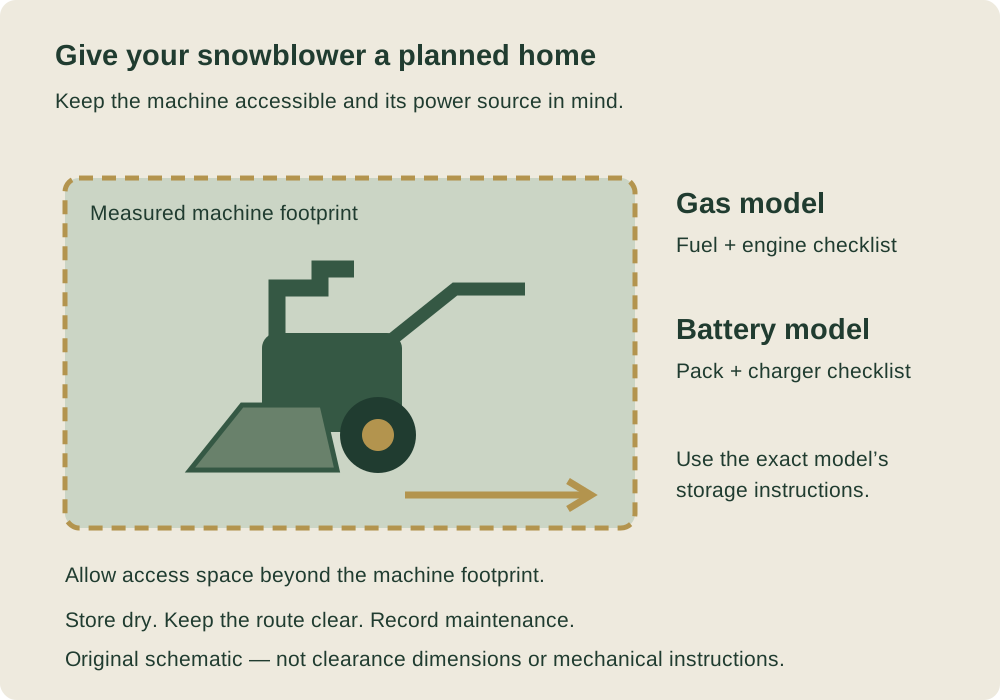
Measure the machine in the configuration its manual allows for storage. Include handles and the chute rather than using only the clearing width advertised on the box. Make a simple floor outline with removable tape and check it with the car parked normally.
Then trace the route from that spot to the driveway. Can you retrieve the machine without moving several bins? Is there room to turn it and open the door? A small space that is easy to use may work better than a larger corner that becomes blocked every week.
Keep a distinction between parking and maintenance space. You may be able to park a machine tightly but need a different area to inspect it or arrange servicing. Do not improvise vertical storage or an overhead rack for a heavy machine; use only storage configurations explicitly permitted by its manufacturer.
2. Gas models: follow the exact fuel procedure
The Toro Power Max 824 OE / 826 OAE manual for models 37798 and 37799 tells owners to shut the engine off, remove the key, let movement stop and allow cooling before storage or cleaning. It warns against storage in living areas, basements or places with ignition sources such as heaters.
Its off-season sequence uses stabilizer in fresh fuel, followed by operation to distribute it and then running the fuel system dry. It also calls for cleaning, checking loose or damaged parts, and covered storage in a clean, dry place. These are examples from that specific manual—not a universal instruction to drain every snowblower.
Copy your model’s required maintenance into a short record and use a qualified service provider for tasks you cannot perform as instructed. Fuel preparation can involve running the engine; never run a fuel-powered snowblower inside a garage or another enclosed space.
A useful record has four fields: task, date completed, parts or materials used, and anything still requiring service. Keeping the receipt beside that record helps you distinguish completed work from a plan you have not carried out.
3. Battery models: plan separate storage for the packs
The EGO SNT2100 / SNT2100-FC manual, page 30, directs owners to remove the battery packs, wipe moisture and debris from the battery area, clean the machine with a dry cloth, and store it in a clean, dry enclosed place away from children and corrosive materials such as rock salt or fertilizer.
That manual says unused 56V batteries should be in an enclosed area that does not fall below −20°C; it gives an optimal charging range of 0–40°C. These values belong to this example. They are not a storage target or permission to charge every brand at the same temperatures. Check your exact pack and charger manuals, including their long-term charge-state instructions.
Label a separate pack-storage spot so the batteries do not get left in the machine by habit. Record the battery model alongside the snowblower model. If a pack is damaged, follow the manufacturer’s handling instructions rather than putting it into the normal storage routine.
4. Separate winter parking from off-season storage
| Planning point | During snow season | Outside snow season |
|---|---|---|
| Access | Keep the retrieval route usable. | Check access again before rearranging the garage. |
| Preparation | Use the manual’s after-use instructions. | Complete its long-term storage and maintenance tasks. |
| Power source | Follow model-specific fuel or battery routines. | Use the appropriate long-term fuel or battery guidance. |
| Records | Note problems as they appear. | Record completed work and unresolved service needs. |
Choose a place for small essentials such as the manual, key and service notes. Keep them identifiable without placing them where children could use them to start the machine. A cover or storage mat should fit the actual setup; neither changes the manufacturer’s environmental or handling requirements.
Before buying accessories, try the proposed layout with what you own. The first improvement may simply be moving a bin, assigning a permanent parking spot or making a clearer retrieval route. See our Canadian winter garage organization guide.
5. Your storage checklist
- Record the machine, battery and charger model numbers as applicable.
- Save the correct manuals and identify the storage sections.
- Measure the permitted storage footprint and test the retrieval route.
- Complete the model’s preparation and maintenance requirements.
- Choose appropriate locations for the machine and its power source.
- Record service concerns and completed tasks.
- Before the next season, follow the manual’s return-to-service checks.
Sources and scope
This guide helps organize storage; it does not replace the machine’s operating instructions or provide a repair procedure. The examples are not a product ranking or hands-on test. We have added no affiliate links.