
Canadian seasonal storage
How to Store Winter and Summer Tires in Canada
Give your off-season set a planned home before changeover day. Start with the rims, then check the location and storage routine.
Reviewed October 4, 2026 · Based on tire manufacturers’ published guidance.
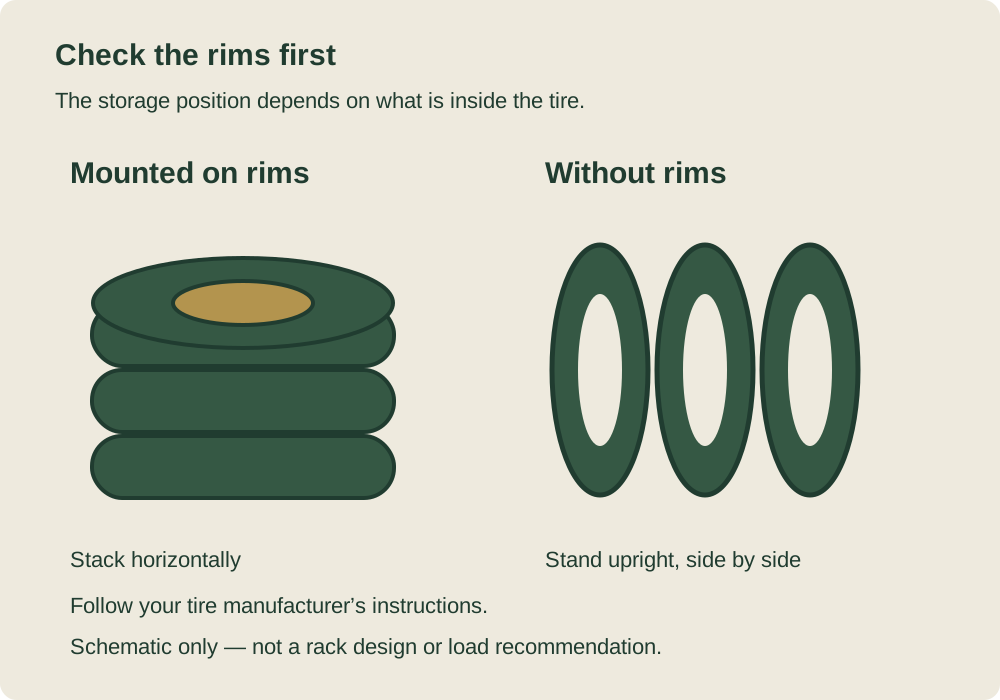
1. With rims or without rims?
Michelin Canada recommends stacking tires horizontally or hanging them when they are mounted on rims. For tires without rims, it recommends standing them upright and says not to stack or hang them. Use your own tire manufacturer’s current instructions if they differ.
| Your set | Storage position | Before choosing equipment |
|---|---|---|
| Tires mounted on rims | Horizontal stacking or suitable hanging storage | Check that the equipment is intended for the mounted set. |
| Tires without rims | Upright, side by side; do not stack or hang | Check that supports fit the tires and the recommended position. |
This distinction prevents an easy shopping mistake: choosing a rack first and discovering later that it holds your set in an unsuitable position. The drawing is a position guide, not a recommendation for stack height, wall fasteners or structural capacity.
2. Prepare the set before putting it away
Michelin recommends recording each tire’s previous vehicle position, checking for damage or uneven wear, and washing and drying the tires and wheels before storage. Keep those notes for the technician handling the next changeover; a position label is a record, not a rotation instruction.
Continental recommends cleaning with detergent and water, drying completely, and skipping tire dressing before storage. Its guide suggests an individual airtight plastic bag for each dry tire, with as much air removed as practical before sealing. It also distinguishes carrying totes from airtight bags: a tote alone may not provide that seal.
Set aside time for drying rather than rushing from washing to packing. Keep a short inventory beside the stored set: vehicle, tire size, whether rims are included, storage date and any concerns to discuss at changeover. That record is useful if you manage more than one vehicle.
3. Is your Canadian garage suitable?
Michelin recommends a clean, cool, dry indoor location away from sunlight, heat and ozone sources. Continental likewise favours a stable indoor environment and cautions that garages, sheds and attics can experience temperature and humidity fluctuations. It also warns against exposure to fuels, solvents and lubricants.
A garage is therefore a candidate to assess, not an automatic answer. Check where sunlight enters, where water collects and where chemicals or equipment are kept. If the available spot does not meet the tire maker’s conditions, compare another indoor location or a professional storage service. Do not treat a bag as a substitute for a suitable environment.
4. Plan the space before buying a rack
Measure the actual set in its intended position. Record the footprint, access space and any awkward lifting route. Consider whether you can reach it with the car parked normally and whether retrieving it would require moving unrelated storage. Keep the route to doors and frequently used equipment clear.
For a rack or hanger, confirm tire-size compatibility, intended rim configuration and the complete-set weight limit. Follow its mounting instructions and seek a qualified installer when the wall or support is uncertain. An advertised rack capacity does not establish the capacity of your garage wall.
Compare home storage and a tire-storage service using the same time period. Request a written quote stating whether it includes pickup, delivery, changeover, inspection or only storage, plus applicable taxes and retrieval arrangements. We have not verified a local service price, so this guide does not publish a guessed Canadian average.
5. Make the next changeover easier
Continental recommends having a tire professional check the set before it returns to the vehicle. Storage does not stop aging or prove that a tire is suitable for continued use.
Bring your inventory and previous-position notes to the appointment. Ask the technician about any damage you noticed before storage and confirm the installation and rotation plan for your vehicle. This guide covers storage planning; it does not replace an inspection or provide tire-changing instructions.
Your storage checklist
- Identify whether the set includes rims.
- Read the tire manufacturer’s storage instructions.
- Record positions and visible concerns.
- Clean and dry before packing.
- Choose a suitable indoor location and compatible supports.
- Keep an inventory and arrange inspection before reuse.
Sources and scope
Manufacturer guidance checked October 4, 2026. This is an organizational guide, not hands-on equipment testing or a product ranking. Links are ordinary source links, not affiliate links.