
Canadian garage buying guide
Tool Chest vs Garage Cabinet: What Should You Buy?
A drawer full of sockets and a shelf full of tool cases need different storage. Start with your belongings, then compare the complete purchase.
Researched October 4, 2026 · Published specifications and Canadian retailer listings; no hands-on testing.
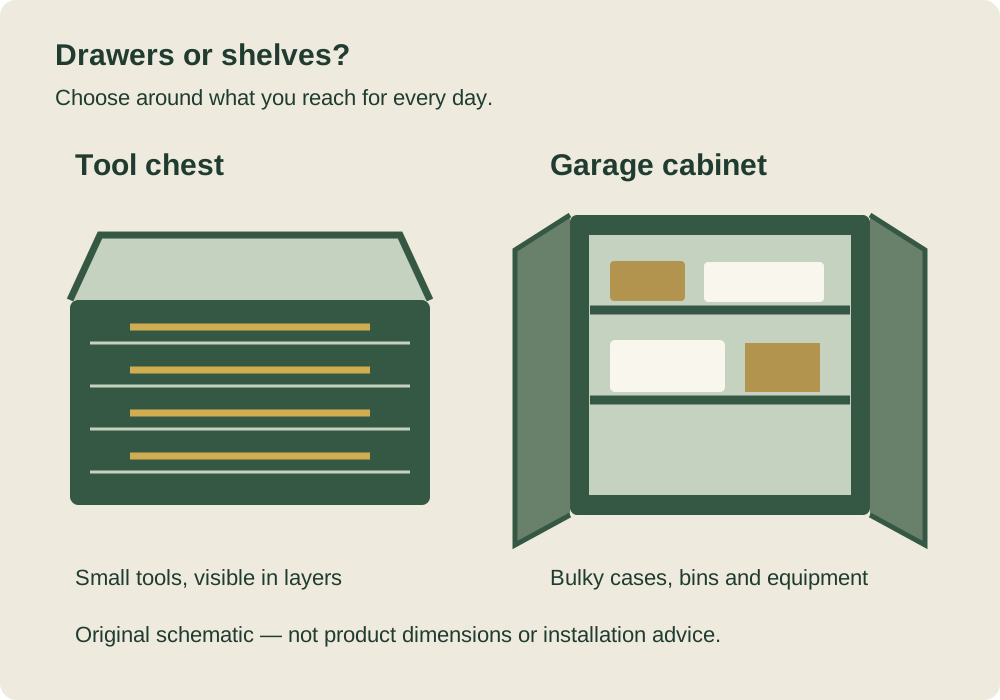
1. A chest is not always a rolling cabinet
A tool chest commonly has drawers and a top compartment with a lid. It may sit on a suitable support or a matching base. A rolling tool cabinet is a separate drawer unit on wheels; a chest-and-cabinet combo includes both. Retailers use these names differently, so check the actual package.
Here, “garage cabinet” means an enclosed cupboard with shelves, particularly a tall locker. A product called a “tool cabinet” may instead have drawers. Look at the interior and included components rather than deciding from the name alone.
2. Compare the way you use your tools
| Decision factor | Drawer storage | Shelf cabinet |
|---|---|---|
| Small hand tools | Lay tools out so you can see each one; check drawer depth. | Use trays or labelled bins to avoid searching a pile. |
| Bulky tool cases | Check internal drawer dimensions; a wide unit may still have shallow drawers. | Check clear shelf width, depth and adjustable spacing. |
| Daily access | Allow room for the fully extended drawer and your standing position. | Allow for door swing and space to lift out a large case. |
| Moving the unit | Only assume mobility if the selected base includes suitable casters. | Check the installation instructions; a tall cupboard is not necessarily movable. |
| Keeping order | Dividers and liners may be additional purchases. | Bins, shelf labels and extra shelves may cost more. |
A drawer system can waste space if most of your equipment is too tall for it. A cupboard can become frustrating if loose small parts disappear behind larger objects. Make an inventory of the awkward items first: your largest case, longest tool, and smallest loose accessories.
3. Canadian prices: compare the whole setup
The following prices were displayed on Canadian Tire’s website on October 4, 2026, with its Meadowvale, Ontario store selected. They are Canadian-dollar examples, not a market-wide price range. Regional prices, promotions and availability can change; check applicable tax and delivery separately.
| Example | Displayed price | What to compare |
|---|---|---|
| Mastercraft 36-inch, 6-drawer tool chest 058-1559-0 | C$399.99 | A chest; do not assume a rolling base is included. |
| NewAge Bold 3.0, 48-inch grey locker 474-4884-4 | C$1,329.99 | A tall cupboard for a different mix of belongings. |
The chest page also displayed a separate Mastercraft 36-inch, 7-drawer rolling cabinet at C$599.99 under “You May Also Need”. Buying both at those displayed prices would total C$999.98 before tax and any delivery or extras. Confirm the approved combination and included hardware before ordering.
These examples do not establish that drawers are always cheaper. They differ in size and purpose. Obtain quotes for units that hold your actual inventory, including the support or base, organizers, required installation materials, delivery and installation if needed.
4. Measure usable space, not just the outside
Check internal dimensions against your largest tool case. Then mark the proposed unit’s footprint with removable tape and test the space with your vehicle parked normally. Include lid clearance, open drawers, door swing and the path you use to enter the garage. Do not assume an advertised overall width is usable storage width.
NewAge’s Canadian Bold Series specifications list its 48-inch multi-use locker at 18 inches deep and 75.25–76.75 inches high, with three steel shelves adjustable in 8-inch increments. Those increments matter: your preferred shelf height may fall between the available positions. Verify the current model and installation instructions.
Read the exact drawer, shelf and total load limits; one does not replace another. Follow the manufacturer’s requirements for securing, supporting and operating the unit. Stack only an approved combination. For an unheated Canadian garage, check the stated environmental requirements and plan how you will keep belongings dry; this guide does not claim either example is weatherproof.
5. Which should you buy first?
Start with drawers if your main frustration is repeatedly searching for hand tools and small accessories near a workbench. Measure the items before choosing drawer depths, and include a suitable base in the budget if required.
Start with a shelf cabinet if you mainly need a home for bulky cases, labelled bins and equipment. Check shelf clearances and how easily you can remove a case without unloading everything in front of it.
Choose a mixed layout if both problems exist. A modest drawer unit beside a cupboard may suit your routine better than a large matching set. Wall storage can handle frequently used items too; see our slatwall vs pegboard comparison.
Research and sources
This is a decision guide based on published information, not a tested ranking or an exhaustive Canadian market survey. Source links below are ordinary links, not affiliate links.