
Garage & storage / Canadian buying guide
Garage Wall Storage Systems in Canada: Choose What Fits
Choose wall storage around the tools, bins and daily routines you actually have. A few well-chosen accessories can be more useful than covering every wall.
Checked October 5, 2026 · Canadian listings and published specifications · No hands-on product testing.
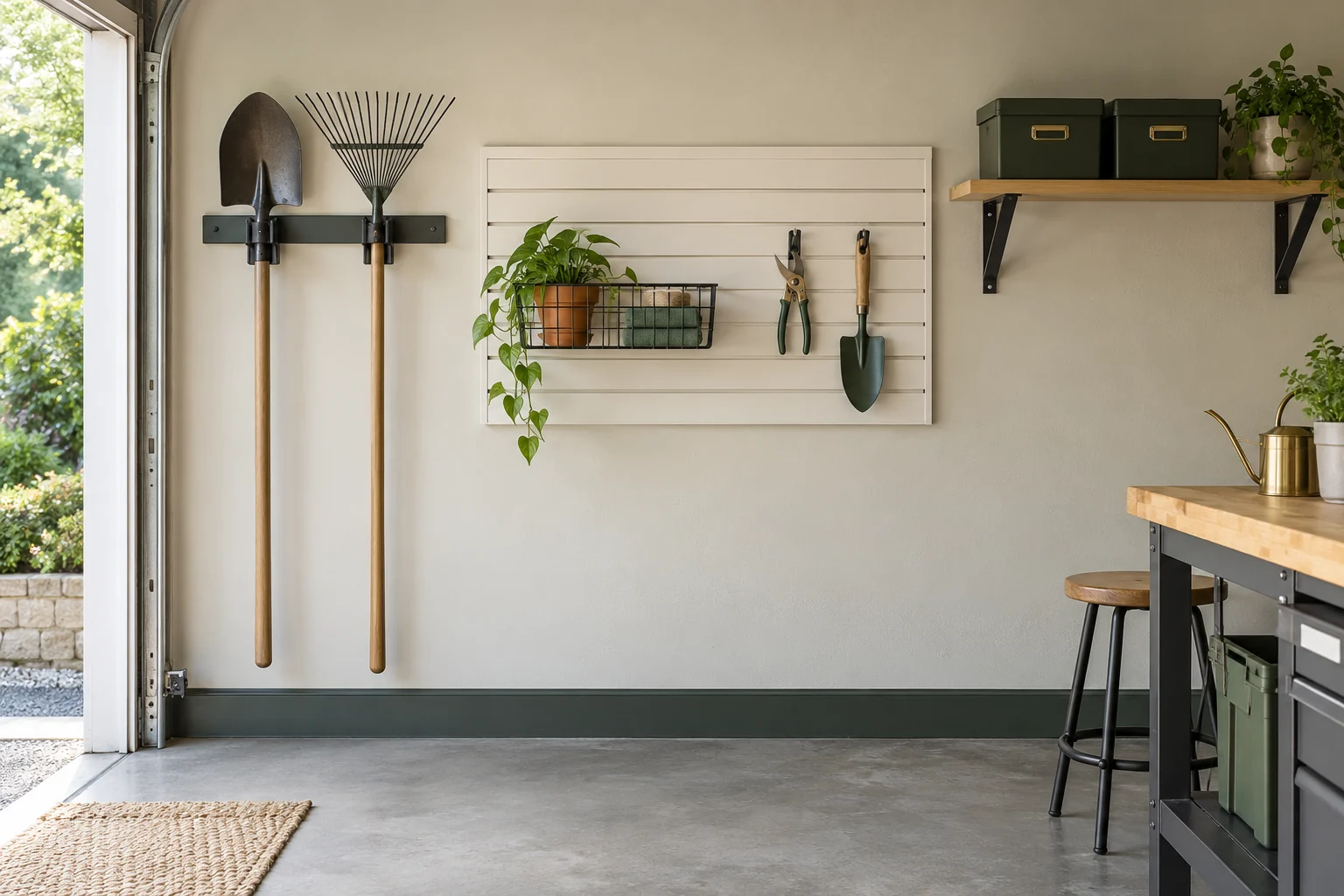
1. Choose the type before the brand
A wall system has two jobs: hold your belongings and keep them easy to retrieve. The right arrangement depends on the shape of those belongings, how often you use them and how much space they project into the garage.
| Type | Useful starting point | Trade-off to check |
|---|---|---|
| Individual wall hooks | A few long tools with fixed positions | Each mounting point needs its own suitable fixing; moving the layout can mean new holes. |
| Rail or track | A line of tools with repositionable holders | Check compatible accessories, locking method and usable rail length. |
| Slatwall | A mixed zone of hooks, baskets and shelves | Panel coverage is only part of the cost; accessories and series compatibility matter. |
| Pegboard | Visible hand tools around a workbench | Check hole size, accessory retention and the clearance required behind the panel. |
| Wall shelves | Containers that do not hang neatly | Shelf depth, bracket system and loaded container weights need checking. |
You can combine these types. A short rail beside a workbench and a small panel above it may solve more than a full wall of accessories. For a closer panel comparison, see Slatwall vs Pegboard.
2. Look closely at what holds the item
A tool hook and a hose holder do different jobs
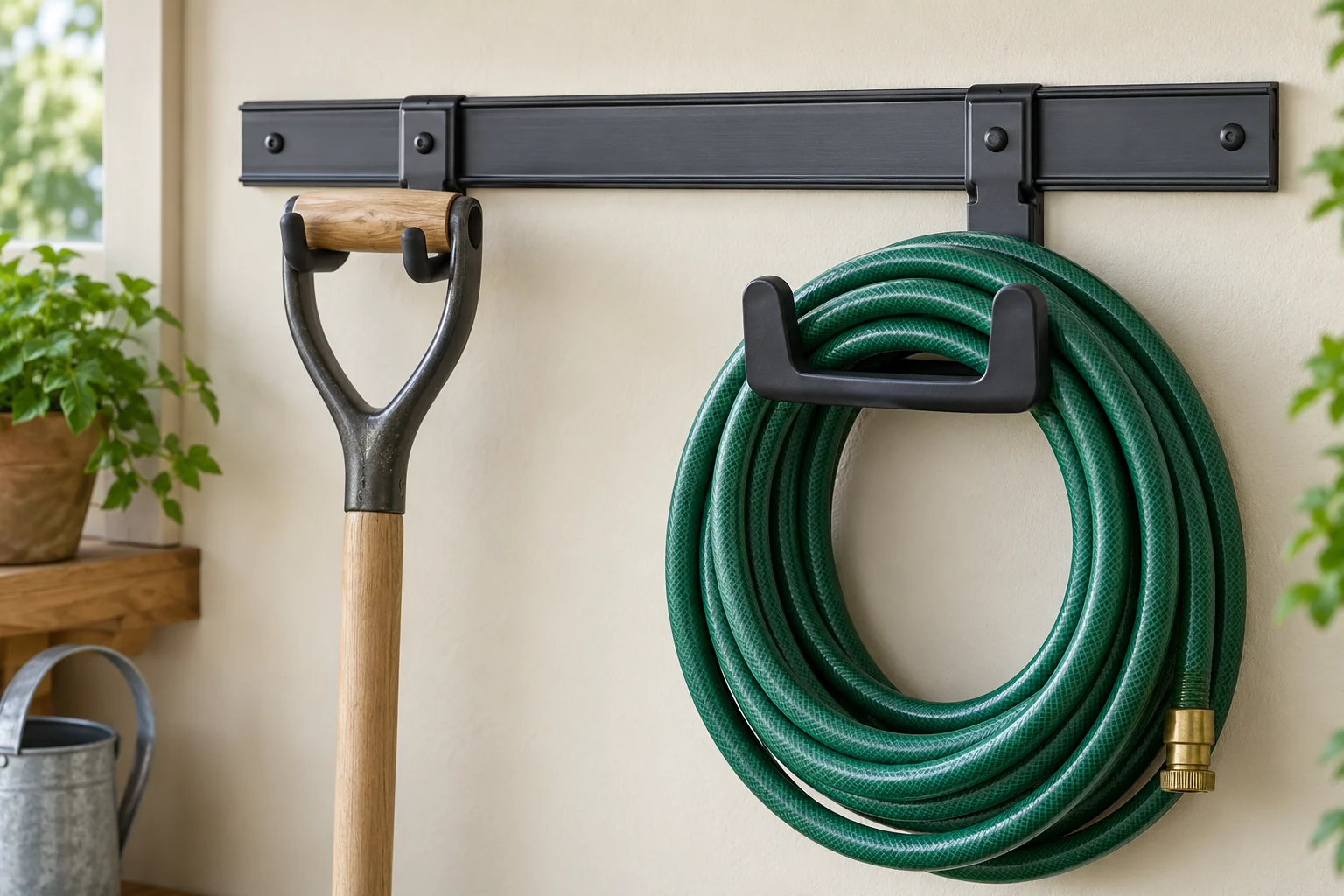
Check how the item sits on its holder, not just whether the holder fits the track. A handle needs a stable resting position; a coil needs enough support to remain gathered. Leave room to lift each item away without catching its neighbour.
Before ordering a hook, measure the part of the item it will support. Check the accessory’s own rating and the maker’s compatibility information. Similar-looking tracks do not establish that hooks from different systems will fit or lock correctly.
Baskets, cradles and small shelves give a panel different uses
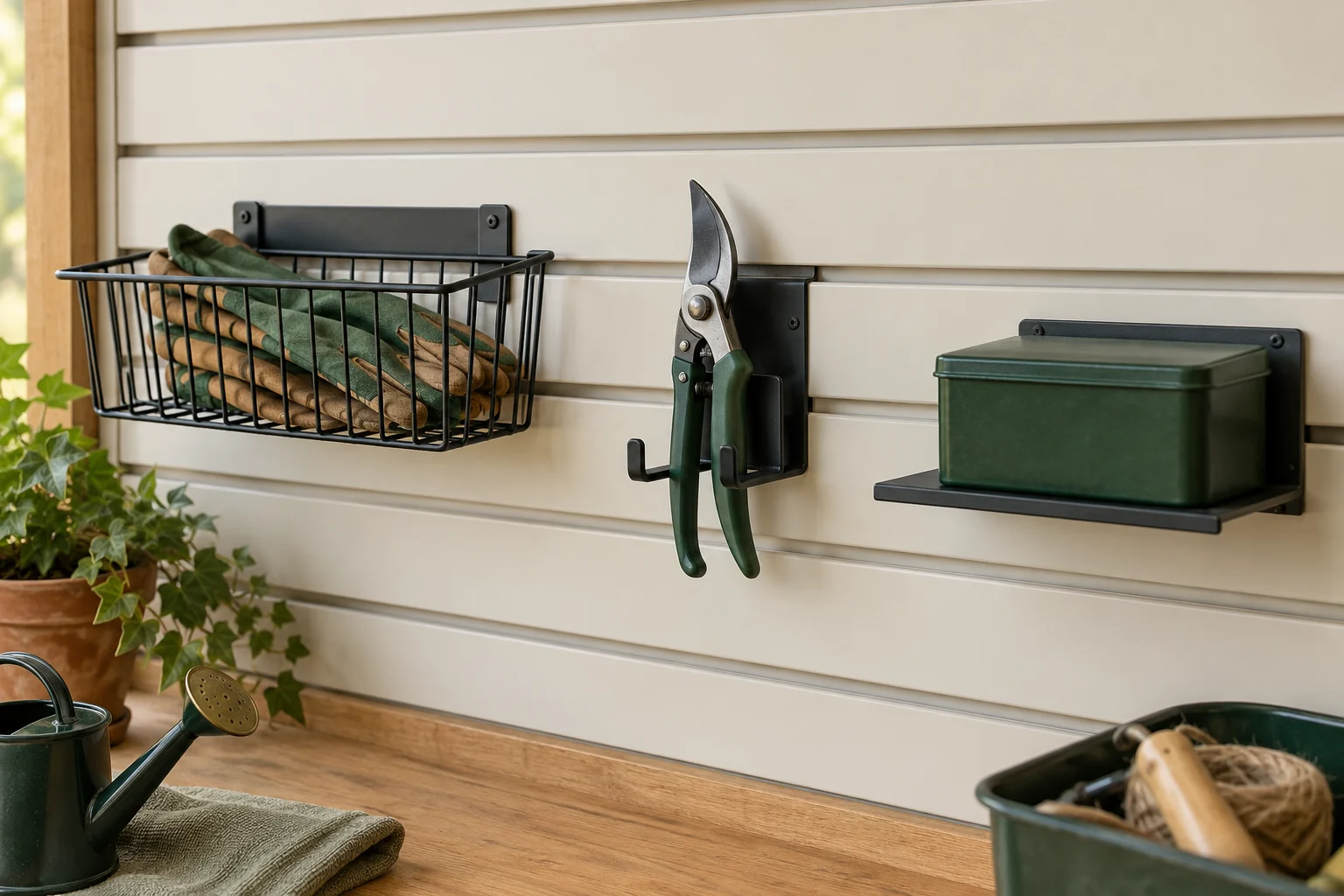
List the accessories needed for your belongings before deciding how much panel to buy. Gloves may work together in a basket, while a frequently used tool benefits from its own visible position. Check the maker’s intended use for each holder and store sharp tools with their blades closed or protected.
Accessory fit can commit you to a system. Proslat’s Canadian page specifies its own hooks and accessories and says its slatwall categories do not interlock with one another. Confirm both the accessory fit and the panel series when extending an existing wall. Source: Proslat Canada.
Shelves need enough usable depth
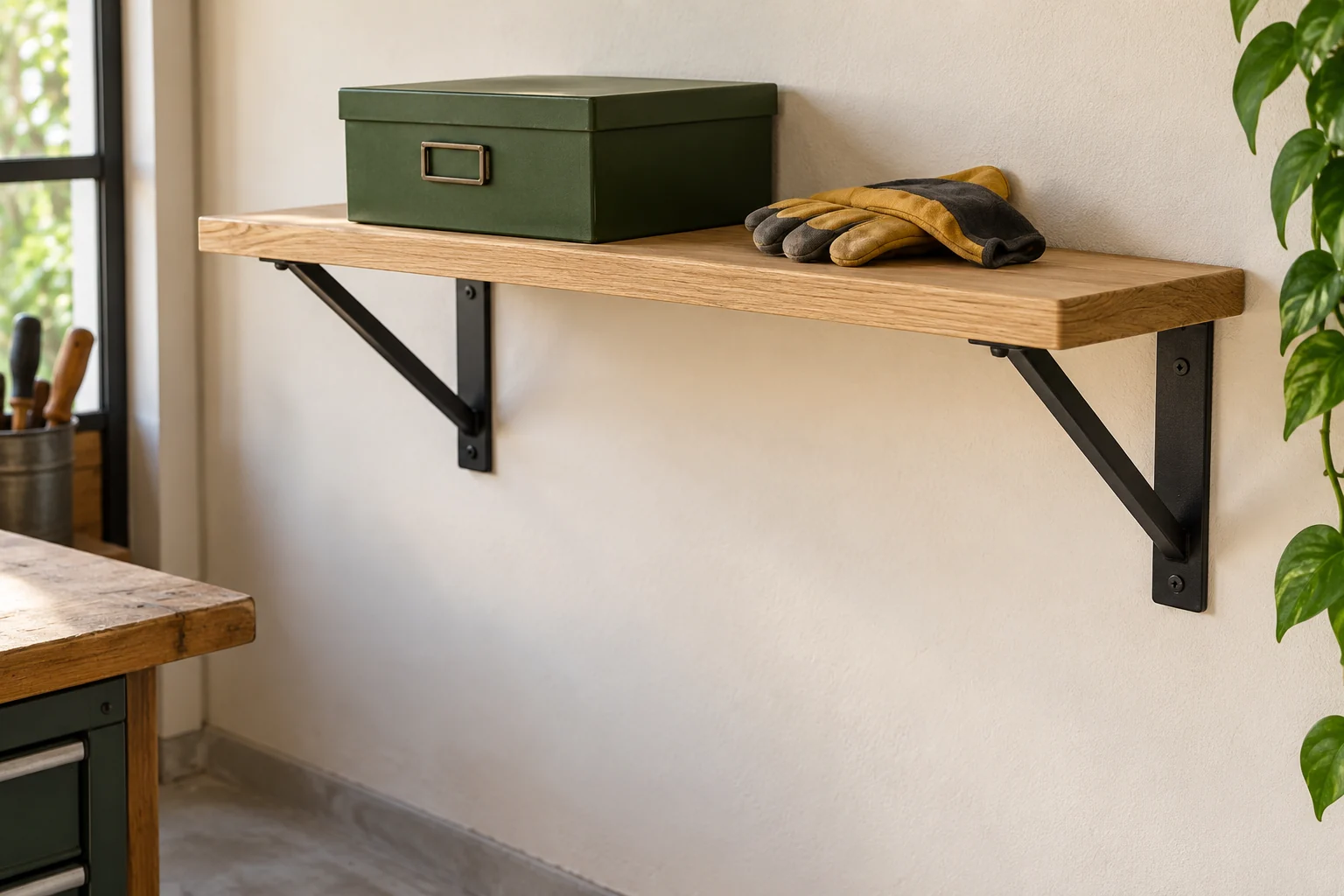
Measure the base of the containers you want to store, then check the shelf’s usable depth. The box should fit without relying on an overhang. Include the weight of its contents when assessing a shelf system.
In a small garage, a deep shelf can narrow the route beside a parked vehicle. Test the proposed projection with a cardboard outline while the car is parked and its doors are open. Plan where you will stand to retrieve a box; put routinely used belongings within comfortable reach.
3. Canadian examples: compare what the price includes
These are examples of three different system types, not a tested ranking or equivalent complete kits. Use the current-price links to view the retailer’s price and local availability. Include applicable tax, delivery and installation when comparing totals; these base components do not make equivalent complete kits.
| Example | Current price | Size / base component | Before comparing totals |
|---|---|---|---|
| Gladiator GearTrack GAWC042PZY | Check current price | Two 48-in. channels | Add the specific holders and confirm required mounting parts. |
| Proslat Classic PVC, white 88102 | Check current price | Nominal 4 × 8 ft. panel section; trims and mounting hardware listed | Price the compatible hooks, baskets and shelves separately. |
| Everbilt galvanized pegboard 859-999 | Check current price | One 16 × 16 in. steel panel | Confirm accessories and mounting requirements for the full area. |
The Everbilt listing accepts 1/8-in. and 1/4-in. peg hooks and says panels can be tiled. Its small panel price should not be compared directly with the price of a much larger slatwall section. Source: Home Depot Canada.
Proslat advertises up to 75 lb per square foot for this PVC system. Its reviewed guide requires suitable wall structure and stud mounting, with the stated rating tied to the specified layout. That panel figure does not establish what an individual basket or hook can hold. Product page · Manufacturer guide, pages 2–4.
4. Check the wall and the space around it
Record the clear wall width and height, then mark doors, switches, outlets and anything that must remain accessible. Consider the garage door’s movement and the space needed around a parked vehicle. A panel can fit on the wall while its accessories obstruct the useful route in front of it.
Identify the wall construction before selecting fixings. Follow the instructions for the exact product and wall type. The Gladiator document reviewed here distinguishes wood-stud and masonry arrangements and specifically calls for checking electrical-wire locations. A wall finish alone does not establish that a mounting point is suitable. Ask a qualified installer when the construction or fixing method is uncertain.
For winter use, keep the tools you need most near an accessible route and leave a convenient place for wet belongings to dry. Do not use the new arrangement to hide a damp wall or a maintenance problem. See our Canadian winter garage checklist for seasonal planning.
5. Compare the complete cost of one useful zone
Give each shortlisted system the same job. For example, plan storage for two long-handled tools, a hose, gloves and one small box. Write down the exact holder needed for each item; a large accessory bundle is not automatically useful if it leaves those jobs unfinished.
| Cost line | What to record |
|---|---|
| Base system | Number of rails or panels needed for your measured zone |
| Item holders | Exact hooks, basket, shelf or brackets for your belongings |
| Mounting | Required parts and any installer quote |
| Checkout costs | Delivery and applicable tax |
| Future extension | Availability of compatible accessories and the correct panel series |
Use the linked listings to obtain current base-component quotes, then add the rest of your shopping list. Choose the arrangement that finishes your useful zone at a manageable total, rather than the one with the lowest starting price.
6. Plan your first wall zone
- Gather the belongings for one task and measure them.
- Record the clear wall area and the depth available in front of it.
- Sketch each holder with enough space to retrieve the item.
- Confirm the wall type, exact product instructions and accessory ratings.
- Price the complete list, then leave room to add only what proves useful.
If you are still sorting the garage, start with our step-by-step organization guide. For tight spaces, use the small garage guide to protect access before adding storage.
Sources and review scope
We researched published Canadian listings and manufacturer documents. We have not installed, tested or load-tested these products. Illustrations explain generic storage ideas and do not show the named products. Source links contain no affiliate tracking.