
Workshop & tools / Practical planning guide
How to Organize a Small Garage Workshop
Make room for small repairs and hand-tool projects without turning every available surface into storage. Start with a usable bench, tools you can find and a routine that restores the space.
Researched October 5, 2026 · Organization guidance with Canadian safety sources · No product testing.

1. Test the space with the garage in everyday use
Measure with the vehicle parked where it normally belongs. Open its doors and the garage’s access door, then check the routes you use for groceries, bins, garden equipment and winter tools. A bench that fits against the wall can still leave too little room to stand, open a drawer or carry something past it.
Use a cardboard outline to test the proposed bench footprint. Include the space needed for an open cabinet door or drawer, your working position and the project itself. Check the garage door’s movement, switches and outlets, and leave essential access unobstructed. Adjust the outline before ordering furniture.
There is no single clearance figure in this guide that proves a workshop layout suitable. The task, equipment instructions and size of the workpiece matter. CCOHS advises keeping exits and aisles clear; its woodworking guidance also calls for enough space around equipment to handle the workpiece. Housekeeping checklist · Woodworking guidance.
| Planning check | What to record |
|---|---|
| Available wall | Clear width, doors, outlets and fixed equipment |
| Bench footprint | Width and depth, including handles or projecting parts |
| Storage access | Fully open drawers or doors and where you will stand |
| Project space | Size of the item being repaired and the tools needed beside it |
| Daily route | Vehicle doors, access door and movement through the garage |
If the footprint interferes with the daily route, consider a smaller work surface or move the workshop zone. Our small garage storage guide helps you protect access while rearranging belongings.
2. Keep the centre of the bench available
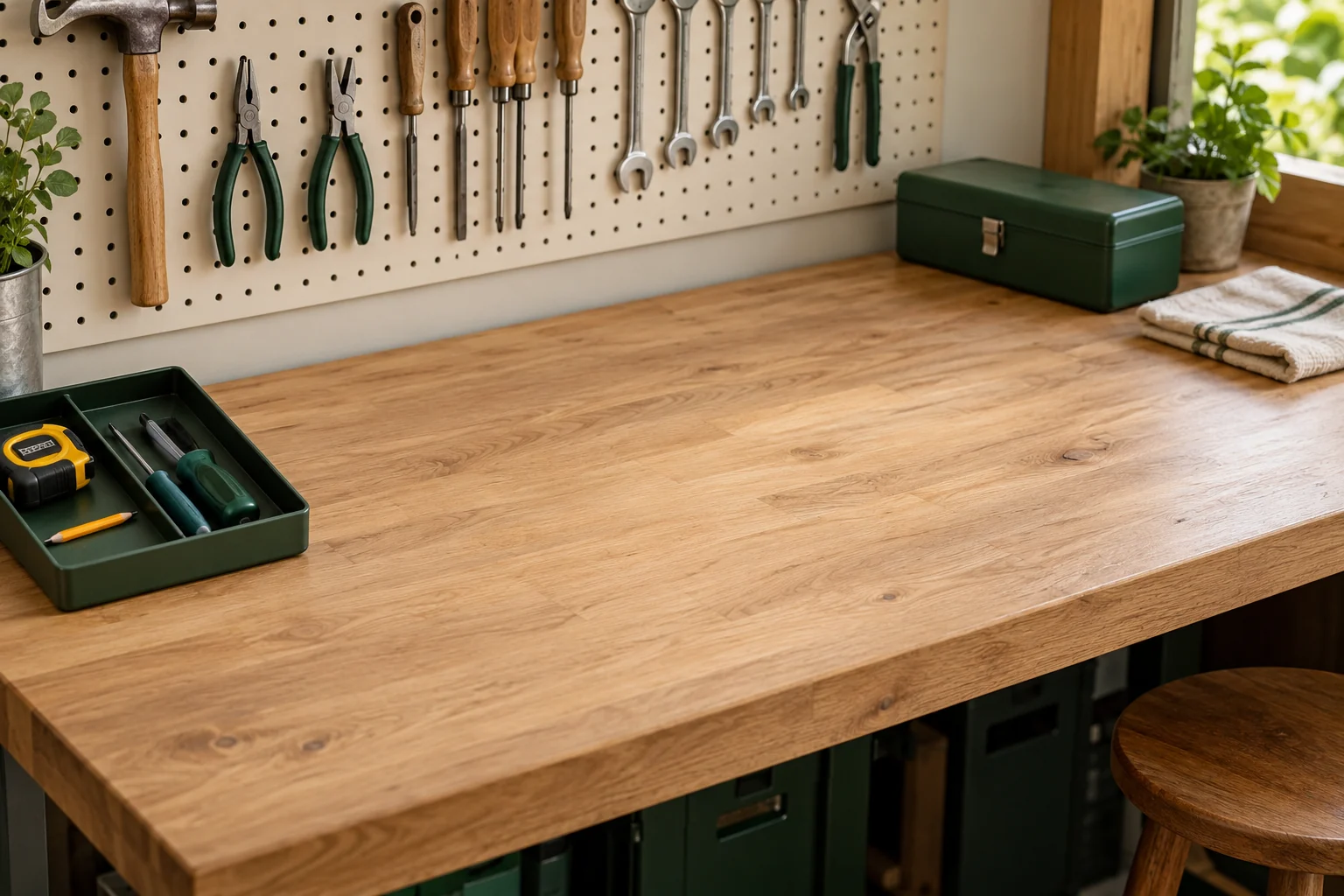
A workbench should give you somewhere to put the project. Store permanent stock elsewhere and bring out the tools needed for the current task. A removable tray is useful for a few small items; a labelled project box can hold unfinished parts when you need to clear the bench.
Choose a bench around the work you expect to do. Check usable surface area, stability, manufacturer instructions and any stated load limits. Test the height for the intended task where possible. A folding or mobile bench may help in a shared space, but it must be set up and secured as its manufacturer requires before use.
Keep handles within the bench edge and protect sharp edges in storage. CCOHS recommends inspecting tools, keeping them clean and dry and using suitable coverings for cutting edges. Damaged tools should be separated from the ready-to-use group until appropriately repaired or replaced. Source: CCOHS hand-tool guidance.
3. Give everyday tools a position you can see
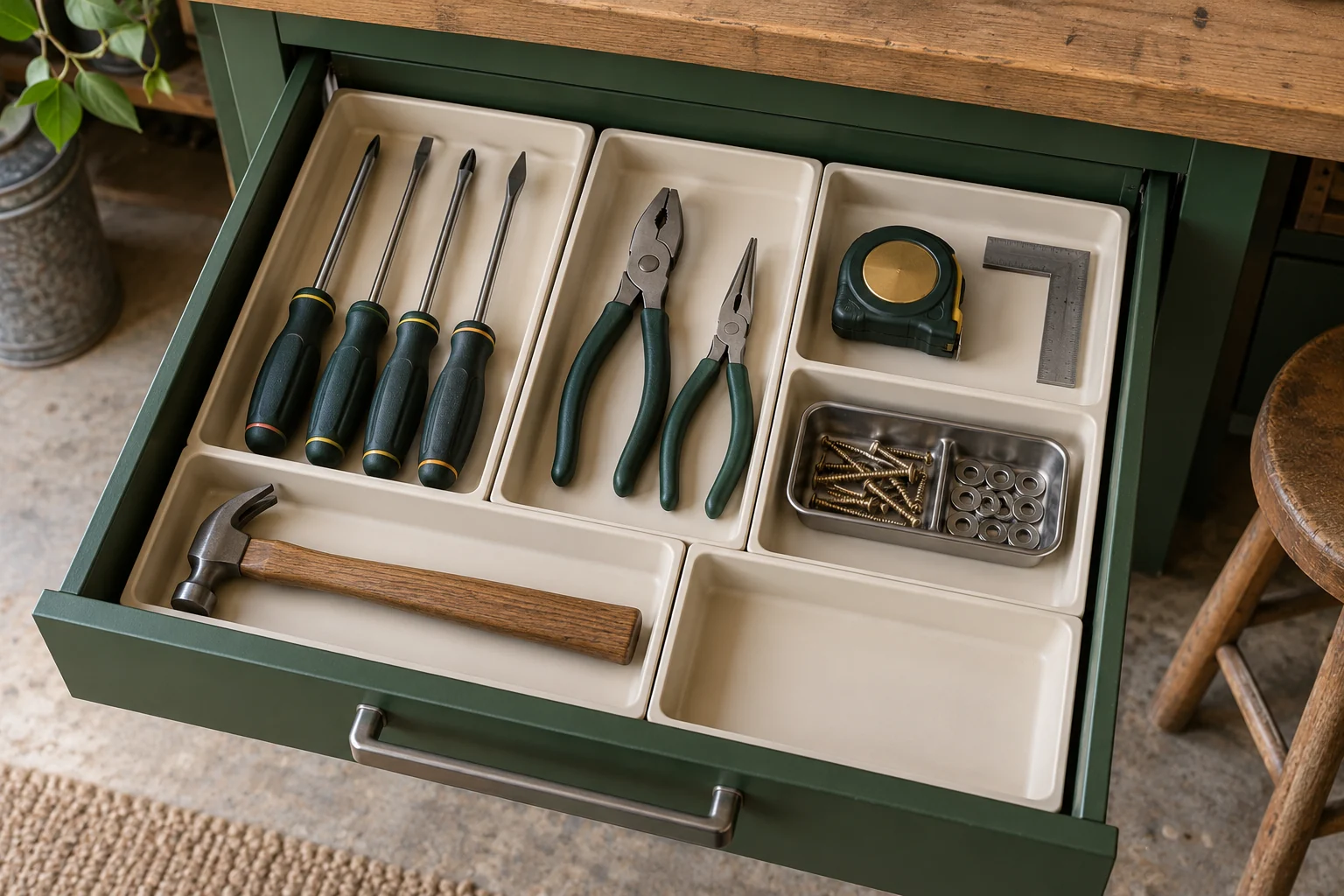
Start with the tools you reach for repeatedly. Group them by the job they do: measuring and marking, driving fasteners, gripping and adjusting. Place each group where it is easy to retrieve, with enough space to remove a tool without disturbing several others.
Shallow trays can make a drawer easier to scan. Measure the drawer’s internal dimensions before buying inserts, including the height available when it closes. Do not buy a large organizer simply because it fills the drawer; it should fit the actual tools and leave room for easy retrieval.
Wall holders can suit frequently used items, while drawers protect a grouped set from becoming a mixed pile. Check accessory fit and load limits for wall storage. Compare tool chests and garage cabinets for bulky cases and larger inventories, or use our wall storage guide for a mixed arrangement.
4. Sort small parts so that you can identify them
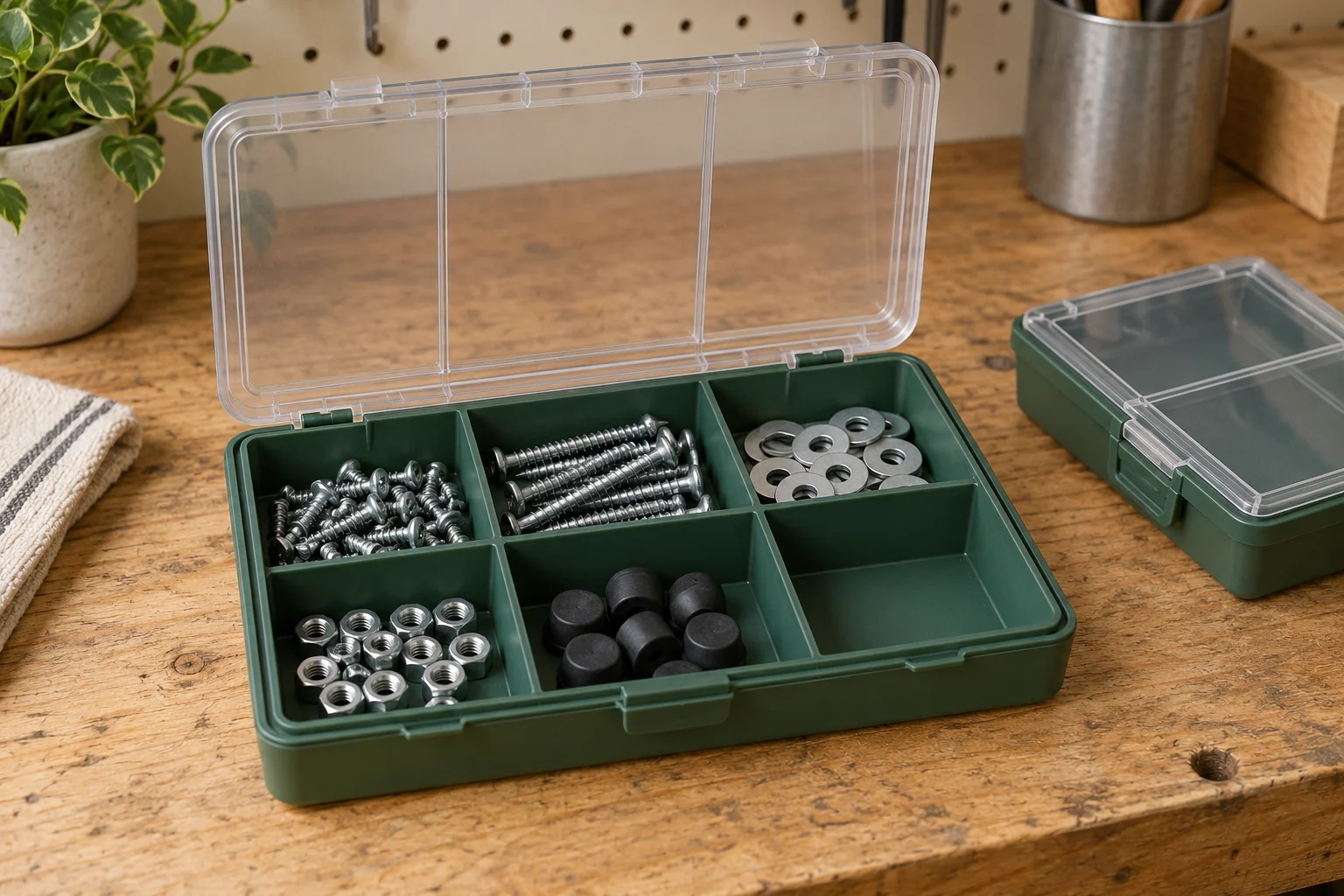
Separate loose hardware by type, then by size where that helps you identify it. Keep original packaging or specifications when a part’s grade, material or intended use matters. Similar appearance alone does not establish that a screw or fixing is appropriate for a particular repair.
Use containers whose contents stay separated when closed and carried. Check the fit of the lid and dividers before relying on a compartment box for very small washers or screws. Label the outside clearly enough to find the contents without opening every box.
Keep a small project container for parts removed during a repair, separate from general stock. Add a note identifying the item they came from. For loose hardware you cannot identify, avoid treating it as interchangeable with a specified part.
5. Make returning the space part of the project
Before you start, decide where unfinished work will go. At the end of a session, put the project and its notes together, return tools, close containers and restore the route through the garage. A workshop that requires clearing a pile before every small repair will be harder to keep using.
CCOHS recommends returning equipment to assigned locations, cleaning up tools and unused material, and storing unused hoses and cables together. Its housekeeping guidance advises against blowing dust away with compressed air. Use a cleaning method appropriate to the material and the equipment. Source: CCOHS housekeeping checklist.
If your projects grow to include powered woodworking, assess that activity separately. CCOHS calls for machine-specific instructions, suitable lighting, workpiece space and effective local exhaust ventilation for woodworking dust and chips. A tidy corner or open garage door does not establish that those requirements have been met. Source: CCOHS woodworking guidance.
In an unheated Canadian garage, check storage conditions in the instructions for the equipment and materials you keep there. Plan a dry storage location and a clear winter access route. Our winter garage checklist covers the seasonal organization step.
6. Start with one workable zone
Use this checklist to plan the first corner before expanding the workshop.
Sources and scope
This is an organization guide for small repairs and hand-tool projects. The Canadian workplace guidance below informs the housekeeping and tool-storage principles; it does not turn this article into a machine-workshop design or a complete home safety assessment. Follow the instructions for your equipment and obtain qualified help for uncertain installation or electrical work. The photographs are AI-generated concepts. No products were tested, and no affiliate links have been added.