
Garage & Storage / Buying decisions
Garage Shelves vs Cabinets: Choose Storage You Can Actually Use
Open shelves make belongings easy to see. Cabinets put them behind doors. Choose around the items you retrieve, the space needed to use them and the conditions in your garage.
Researched October 6, 2026 · Canadian household planning · Based on published guidance; no hands-on product testing.
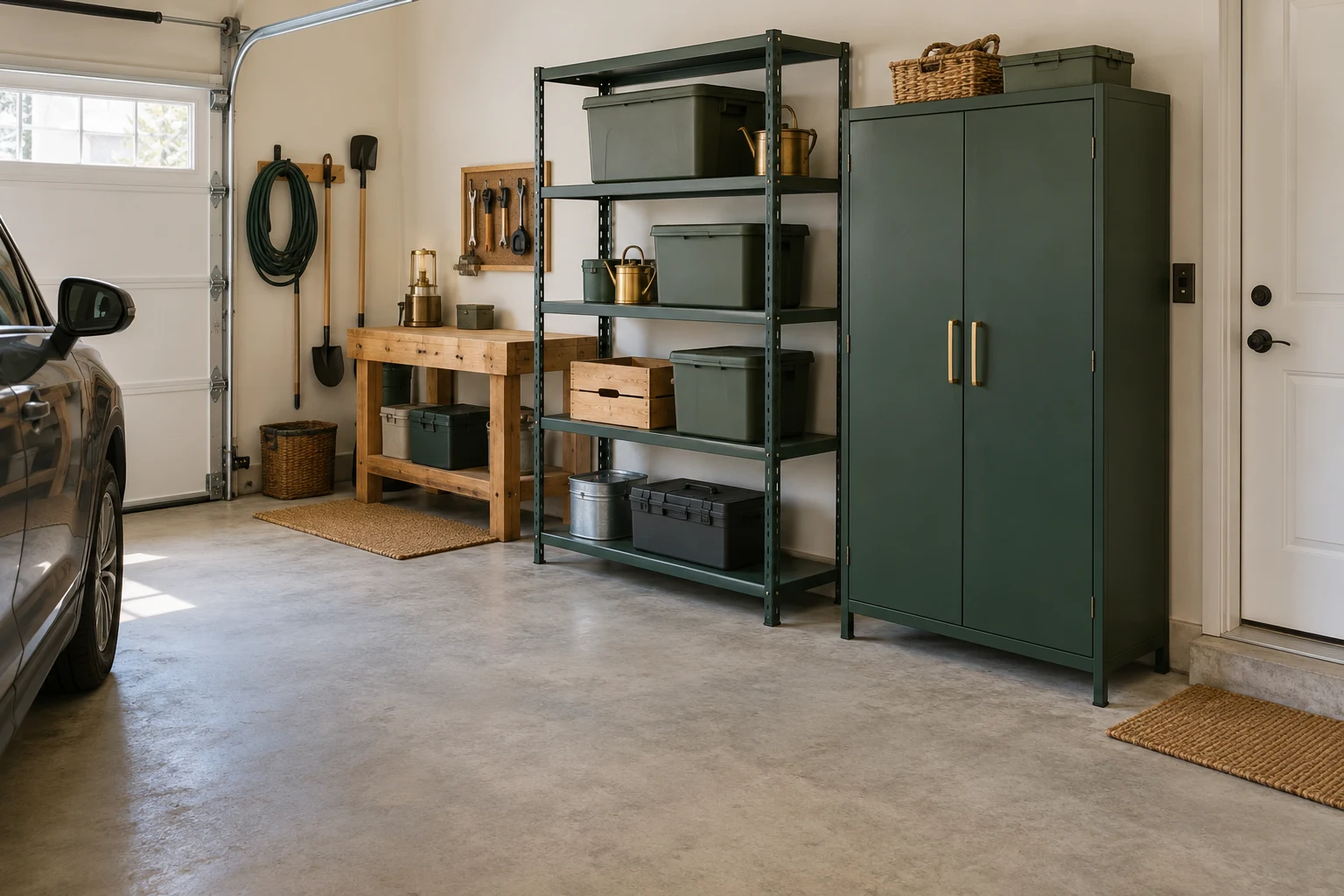
1. Compare what happens when you use the storage
A cabinet can make a garage look calmer, but the closed door does not tell you whether the contents are easy to reach. A shelf can look busy while working very well. Judge each option by a complete task: finding an item, taking it out and returning it.
| Decision | Open shelves | Cabinets |
|---|---|---|
| Finding belongings | Contents visible; labels help with closed bins | Open the door first; interior trays and labels help |
| Retrieval space | Room to lift or slide the bin out | Door swing plus room to remove the item |
| Loose small items | Usually need bins or trays | Still need bins, trays or suitable drawers |
| Dust and appearance | Exposed contents; lidded bins can help | Doors conceal contents; ordinary cabinets are not necessarily dust-tight |
| Security | No built-in restriction unless separately provided | Some models lock; verify the model and intended use |
| Cost to make it useful | Include bins, assembly and required securing | Include interior organizers, assembly and required securing |
Neither type has a universal strength advantage. Capacity depends on the exact unit, shelf, load distribution and installation. A large total capacity claim is not permission to put that amount on one shelf.
2. Choose open shelves for visible, repeatable storage
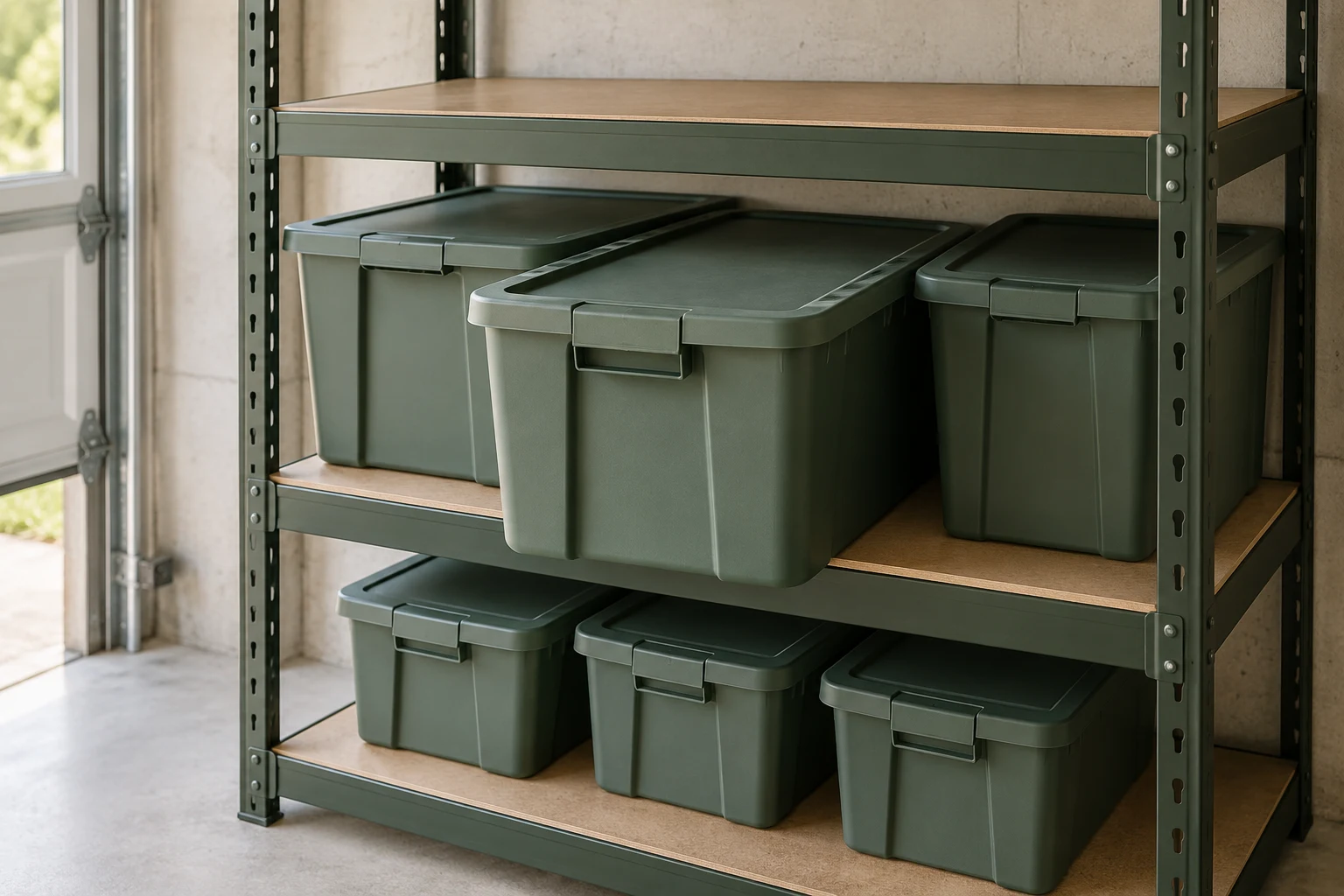
Open shelving is a useful candidate when most belongings are already in manageable containers: sports accessories, seasonal decorations or supplies that you group by task. Make the front of each container tell you what is inside. Avoid using the space behind a daily-use bin for another daily-use item.
Measure bins across their widest points, including handles and lids. Check the usable opening between uprights, not only the overall furniture width. Shelf supports can reduce the opening. Also check whether the bin can be lifted or slid out at the intended height; fitting on a shelf and being easy to retrieve are different tests.
Try one shelf group before filling the unit. If a container is uncomfortable to handle, divide its contents or change the location. CCOHS storage-layout guidance considers user reach, convenient storage height and access routes. We apply those principles to household planning rather than treating a workplace diagram as a home installation specification. Source: CCOHS storage layouts.
3. Choose cabinets when doors solve a real problem
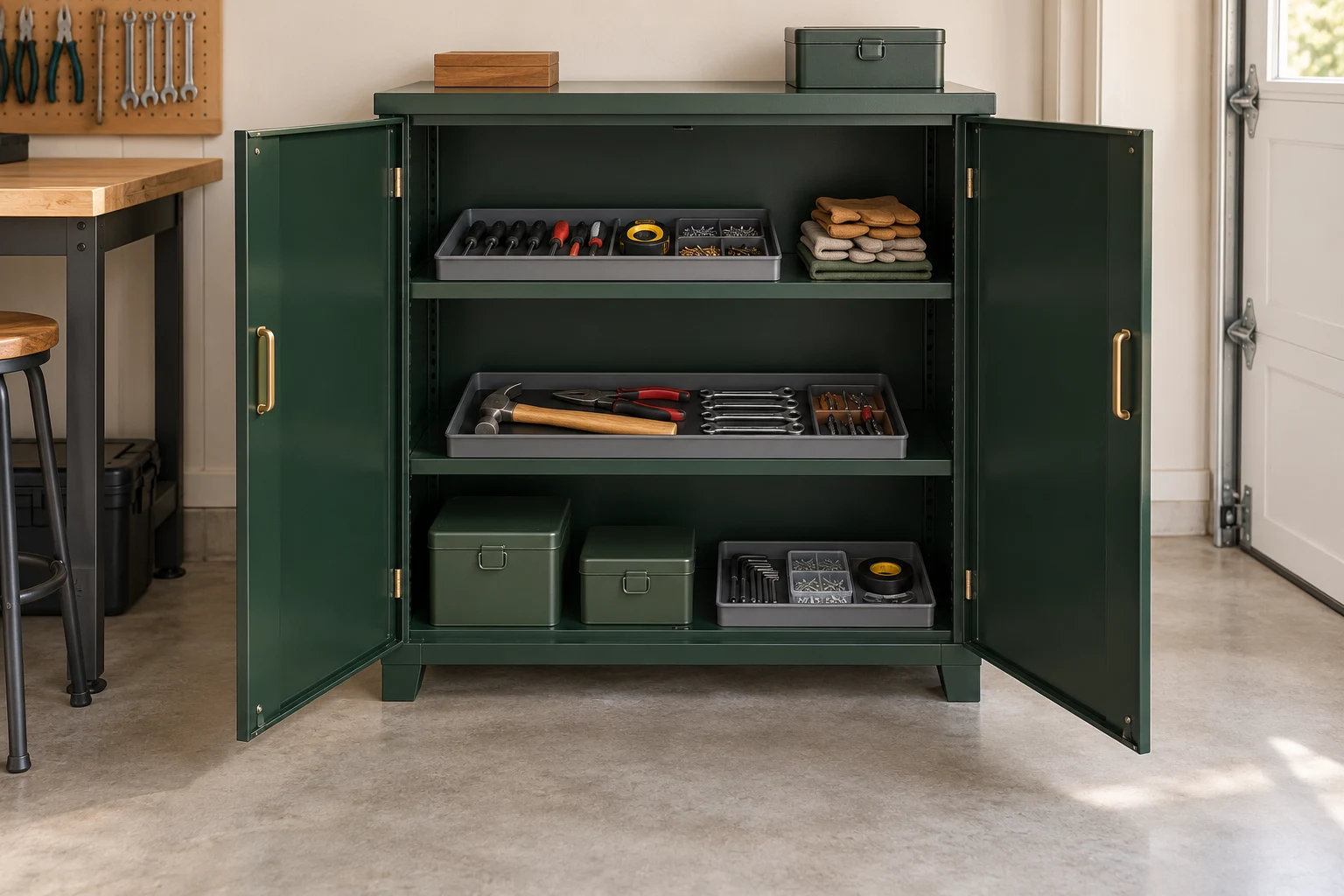
A cabinet is worth considering when visual clutter distracts you, when a collection of small belongings benefits from a defined enclosed zone, or when the exact model provides a lock you need. Choose the interior layout first. A tall empty compartment is not automatically useful for small tools.
Use trays that can be removed independently and shelves spaced around the actual contents. Put frequently used items where the intended user can see and reach them. An organizer that blocks the hinge or prevents the door closing is the wrong size even if it fits between the side walls.
Ordinary garage cabinets should not be assumed waterproof, airtight, fire-rated or suitable for hazardous substances. Doors also do not guarantee protection from garage humidity. For hand tools that need organised drawers, compare a tool chest with a garage cabinet rather than assuming every cabinet provides that function.
4. Test the footprint and the retrieval path
Park your vehicle where it normally sits. Use cardboard to outline the proposed unit on the floor. Open the car doors and walk the route to the house, outdoor door and equipment you need to access. Then simulate a cabinet door opening or carry your largest bin through the retrieval space. Do not add tape marks where they create a trip hazard.
Record two sets of dimensions: the furniture's overall footprint and its useful interior openings. For a cabinet, include handles, hinges, door swing and the space needed to stand. For a shelf, include uprights, shelf supports and lifting space above the contents. Check the actual product drawing before ordering.
Illustrative measurement example: a bin measuring 56 cm across its handles cannot fit through a 54 cm clear opening, even if the unit's advertised outer width is 60 cm. These are invented dimensions explaining the check, not specifications for a product.
A mixed arrangement may fit better: one open shelving bay for lidded bins and one cabinet for small supplies. Start with the smallest arrangement that resolves the problem, keeping room for the workshop tasks you actually do. Our planning guide helps you make the inventory first.
5. Check the instructions and the Canadian garage conditions
Read the exact model's assembly, anchoring and load instructions before buying. Check the floor and wall conditions those instructions require. Do not infer mounting hardware or wall suitability from our illustrations. For example, NewAge's Bold Series support page says its fixed Bold 3.0 cabinets should be secured to the wall; the rolling tool cabinet is an exception. That is guidance for that series, not a rule specifying hardware for every cabinet. Source: NewAge Bold support and manuals.
In an unheated Canadian garage, consider tracked-in moisture, condensation and temperature changes. Verify what the unit's materials and stored belongings tolerate. Keep items dry as their instructions require; enclosing damp belongings does not solve moisture. Inspect storage for damage, movement or corrosion and follow the manufacturer's guidance on loading and use. Source: CCOHS storage stability and manufacturer guidance.
Compare the complete setup cost: unit, bins or trays, required installation, delivery and taxes. Use the retailer's current listing for price and Canadian availability; avoid choosing on an old sale figure. This guide compares storage approaches rather than ranking untested products.
Your shelves-or-cabinets checklist
Check these during this visit; selections are not saved between visits.
Sources and scope
The linked CCOHS guidance and NewAge support page were reviewed October 6, 2026. Organizing examples and measurement exercises are original household planning suggestions. We have not tested the furniture or verified a specific home installation. Illustrations show generic concepts, not the manufacturer's products.