
SMALL SPACES · HOLIDAY ORGANIZATION
A Gift-Wrapping Station for a Small Home: Set Up, Wrap, Put Away
Turn one surface into a useful wrapping spot, then return the room to everyday life. A portable kit and a clear working area can do more for a small home than another permanent piece of furniture.
Prepared October 9, 2026 · Original organizing plan; illustrations show concepts rather than tested products.
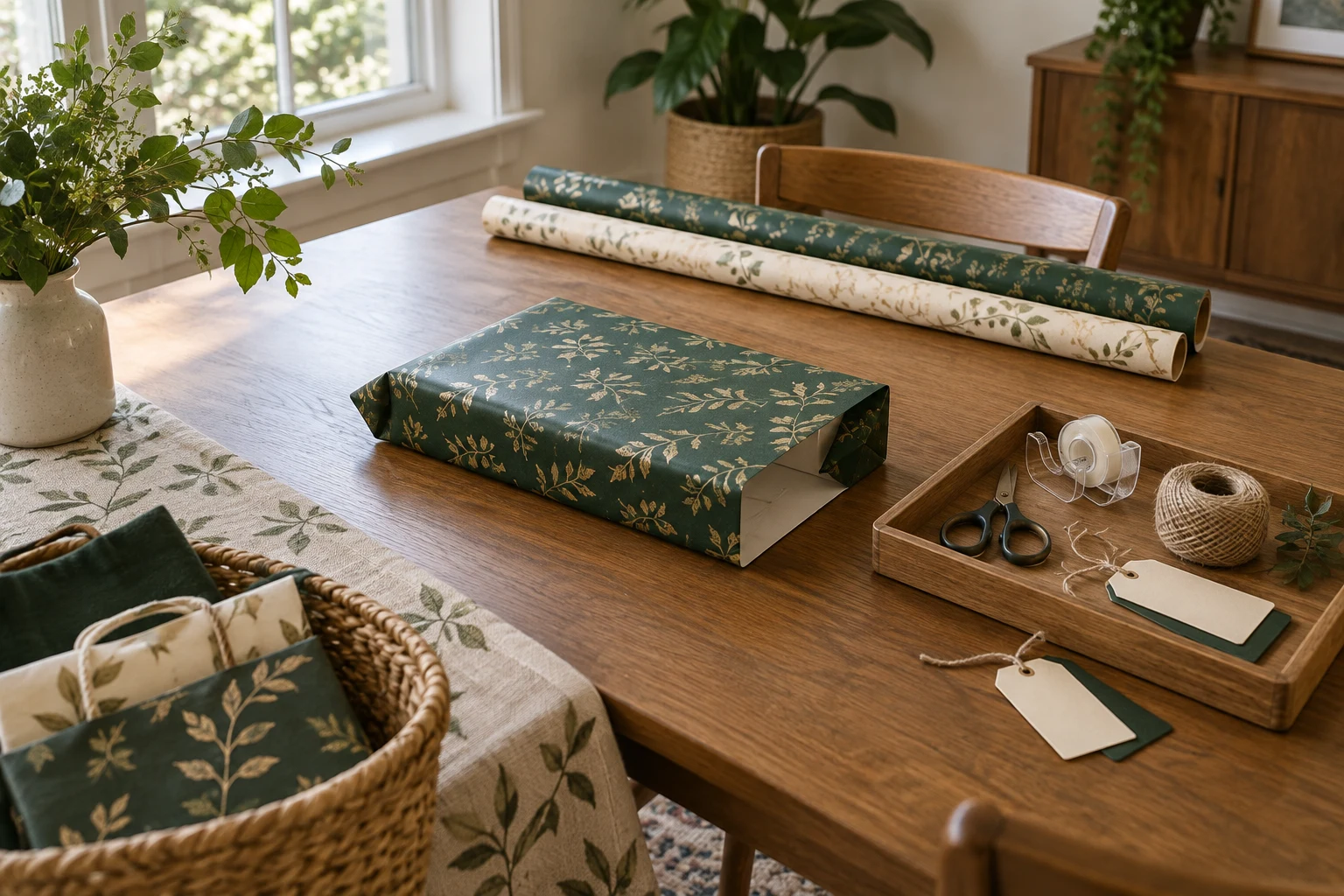
1. Choose the surface around the gift
A dining table, desk or suitable counter can be a temporary wrapping station. Choose a stable surface with useful light and a position you can comfortably work at. Protect a finish that could be marked by tools or adhesives, and check the surface or protective mat instructions.
Clear enough room to rotate the gift and extend the paper. The important measurement is the working arrangement, not just the width of the table. Put your largest typical gift in the centre, unroll a little paper and try the movements before committing to a layout.
Keep one edge for supplies and another place for finished parcels. If there is no room for a second pile, move each completed gift to its destination. Avoid letting loose rolls, offcuts or bags spill into the path around the table.
A useful planning example
A 30 × 20 cm box occupies that footprint while still. Once you rotate it, fold paper around it and reach for tape, you need more room. There is no single extra clearance that fits every gift or wrapping method: test the task on your own surface.
2. Keep the small tools together
Start with a tray, shallow box or divided container you already have. Give tape, scissors, tags and ribbon a defined place. The aim is to carry the essentials to the work area in one trip and return them without searching through several drawers.
Separate tools from easily crushed tissue or bows. Use small removable cups or boxes for items that otherwise collect in the corners, and keep tag-writing supplies with the tags. Make the contents visible enough that someone else can find and return an item.
Choose a kit that fits its destination when filled. Measure the shelf opening or drawer, including obstructions such as hinges. A deep container may hold more but make small items harder to see. A wide tray may be convenient on the table but awkward to put away.
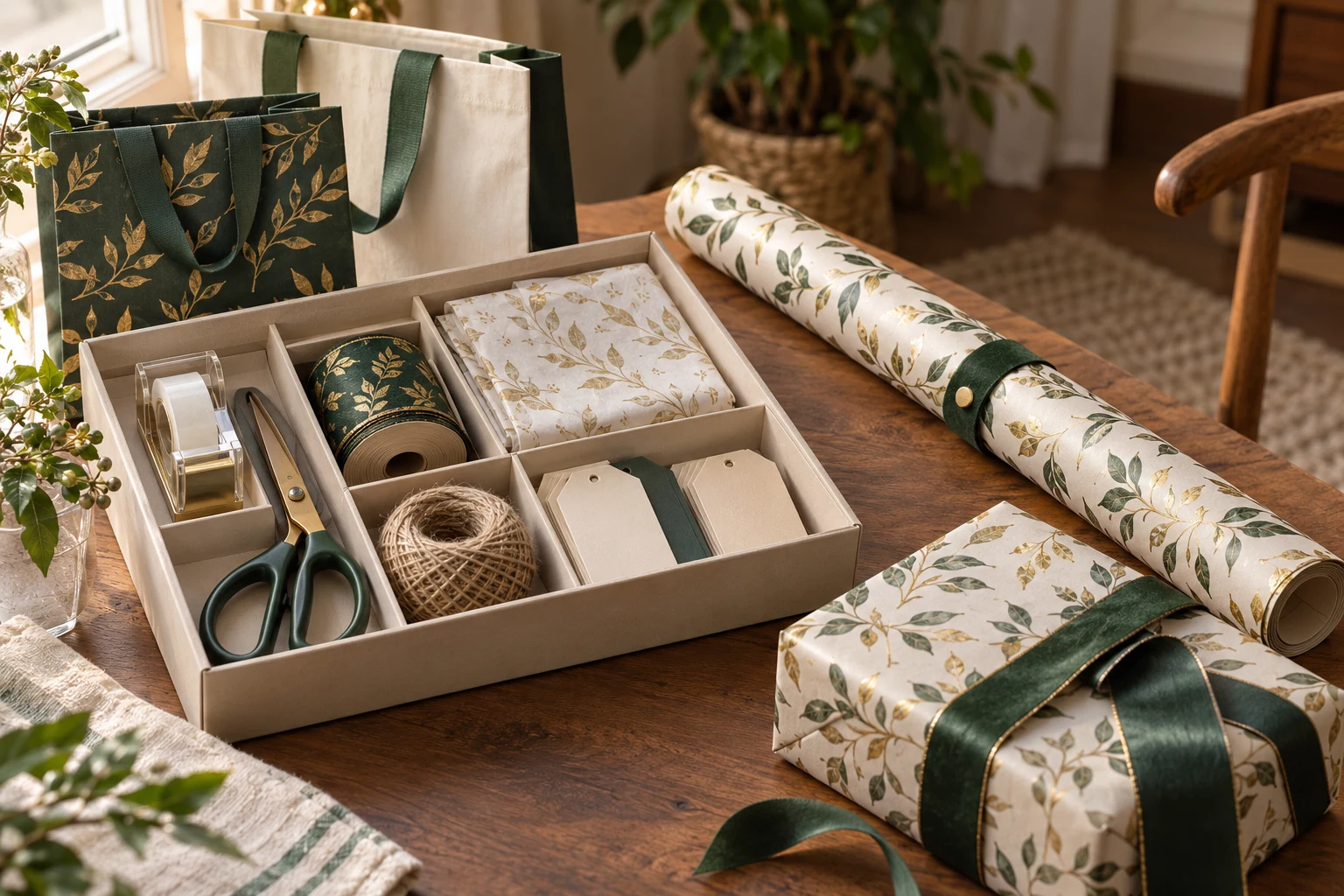
3. Give long rolls and loose ribbon separate homes
Measure your longest roll before choosing a storage bag, bin or drawer. Also check the diameter of the largest full roll and the number you actually intend to keep. A container that accepts the length may still be difficult to close when filled.
Keep paper dry and protect the ends from being crushed. Try a suitable reusable band around a roll to stop it unrolling during storage, without tightening it enough to mark the paper. Keep scraps only if they have a clear future use and a defined container.
Fold or wind leftover ribbon into a form that is easy to retrieve. Group gift bags separately so their handles do not tangle with tools. Before buying new supplies, check whether a sound reusable bag or the paper you already own suits the present.
4. Compare the format before the product
Use these questions when evaluating an organizer. They are planning comparisons, not claims about a specific brand's load capacity or performance.
| Format | May suit | Measure or check |
|---|---|---|
| Portable tray or shallow box | Small tools brought to an existing table | Filled size, handle or carrying arrangement, and space to store it |
| Long flat organizer | Paper rolls and supplies stored together | Usable internal length, closure, dividers and retrieval room |
| Rolling cart | Supplies moved along a suitable clear floor route | Overall footprint, shelf openings, wheel instructions and parking position |
| Wall or door organizer | A defined vertical storage position | Compatible mounting, door movement, contents fit and manufacturer instructions |
Include delivery, required accessories and returns in your comparison. A trolley is storage rather than automatically a work surface. A wall organizer saves useful space only if the contents can be reached and put away without interfering with the room's other uses.
Record two possible arrangements with our free storage-planning worksheet. Prices for any selected product should be checked directly at the retailer when you are ready to buy.
5. Wrap in a simple sequence, then reset
Set out the current gift, the paper and the few tools needed. Hallmark's pictured wrapping guide recommends checking the paper against the box before cutting and making a test fold before final creasing or taping. See Hallmark's step-by-step gift-wrapping guide. That is a useful technique reference; the workstation plan here is our own.
Label the finished gift while you still know which contents belong to whom. Move it aside, clear offcuts and bring out the next item. Save ribbon and decorative touches for a stage when they do not obstruct cutting and folding.
At the end, close or put away cutting tools appropriately, return small items to their kit and secure the rolls. Store supplies where children or pets cannot gain inappropriate access to sharp tools or loose materials. Return the table to its everyday purpose instead of leaving a project spread across the room.
Your setup checklist
Use these boxes during this visit. They do not save between visits.
Common questions
Do I need a permanent wrapping table?
Try a suitable existing surface and portable supply kit first. A permanent setup earns its space when it fits both the frequency of the task and the room's other uses.
Should I buy an under-bed organizer?
Measure the accessible opening, usable clearance and the room needed to pull it out. Check the organizer's internal roll length and closure. The label alone does not establish fit.
Can the kit be used after Christmas?
Yes. Keep the everyday wrapping tools together and store seasonal decorations separately. Adjust the paper, bags and tags for birthdays or other occasions.
Sources and scope
The linked Hallmark guide supports the attributed wrapping technique. The storage-format comparison, trial setup and reset checklist are original household planning suggestions. No specific organizer has been tested or ranked here, and no mounting or load limits are implied.