
SMALL HOMES · HOLIDAY PLANNING
Christmas Decorating for Small Spaces: Festive Without the Clutter
Keep the room useful while you decorate it. Choose one main display, measure its complete footprint and give everyday belongings somewhere to go before adding more.
Prepared October 14, 2026 · Original planning examples, not tested product recommendations.
1. Keep everyday movement first
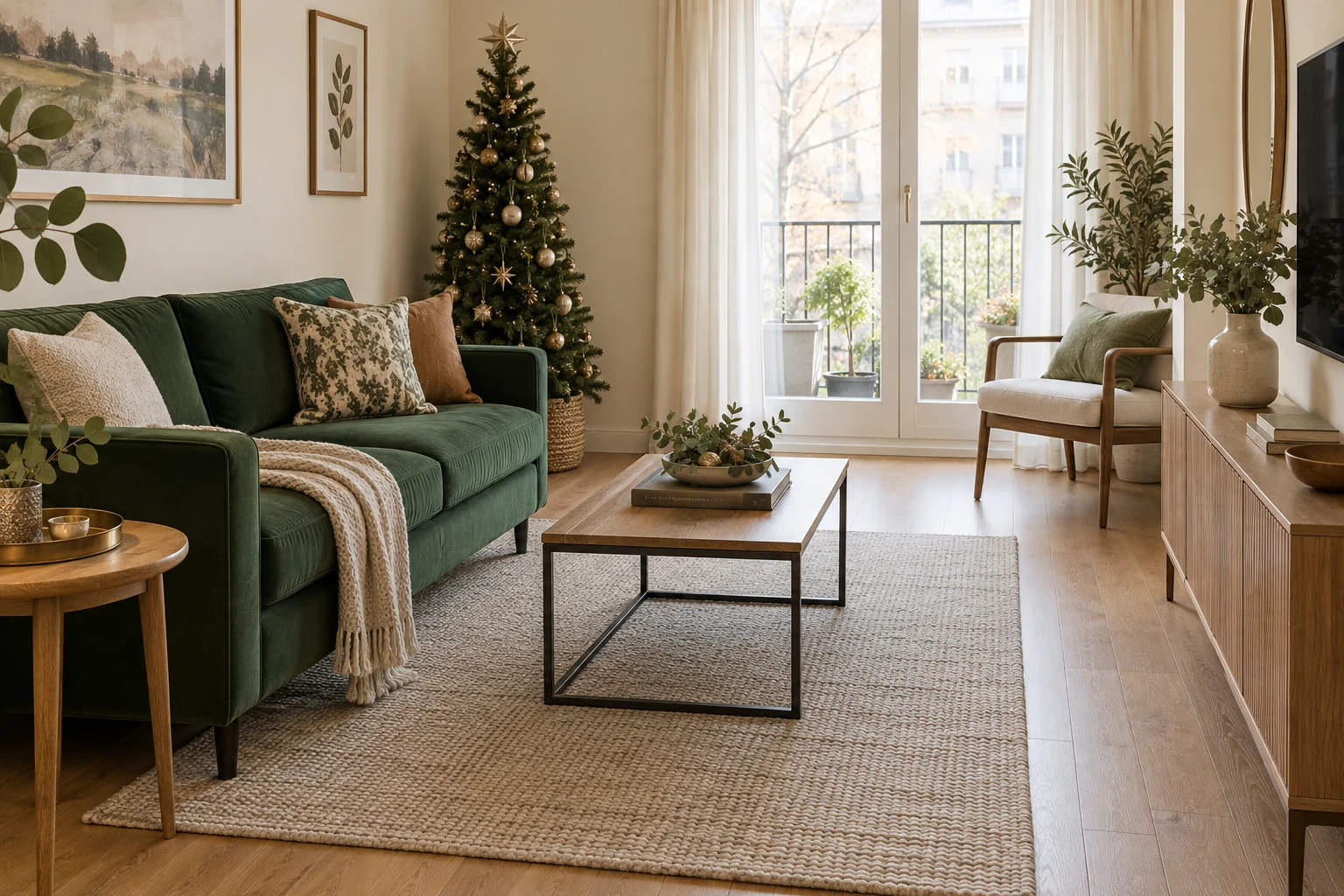
List the things the room does on a normal evening: someone comes through the entrance, opens a cupboard, carries dinner or sits down. Try each action with the furniture in its usual position. Include a fully open door, a pulled-out chair and the drawer you use every day, rather than checking only the room when everything is closed.
Keep exits clear. The National Fire Protection Association's Christmas tree guidance says a tree must not obstruct an exit and should be at least 3 ft (about 91 cm) from heat sources. Follow the tree and lighting instructions too; an attractive unused corner is not automatically a suitable location.
Try a temporary outline for the proposed footprint, using paper or a removable method suitable for your flooring. Remove trip hazards as soon as the trial is finished. If the outline makes normal use awkward, choose a smaller display or another location before ordering. This planning trial does not assess accessibility or building-code requirements.
2. Measure more than the tree height
Write down the ceiling height and the display's widest width and depth, including the stand and any branches or decorations that project farther. Add the topper to the height check. For a tabletop display, include its pot or base and check the furniture manufacturer's load limits and stability. Keep decorations back from edges where they can be knocked over.
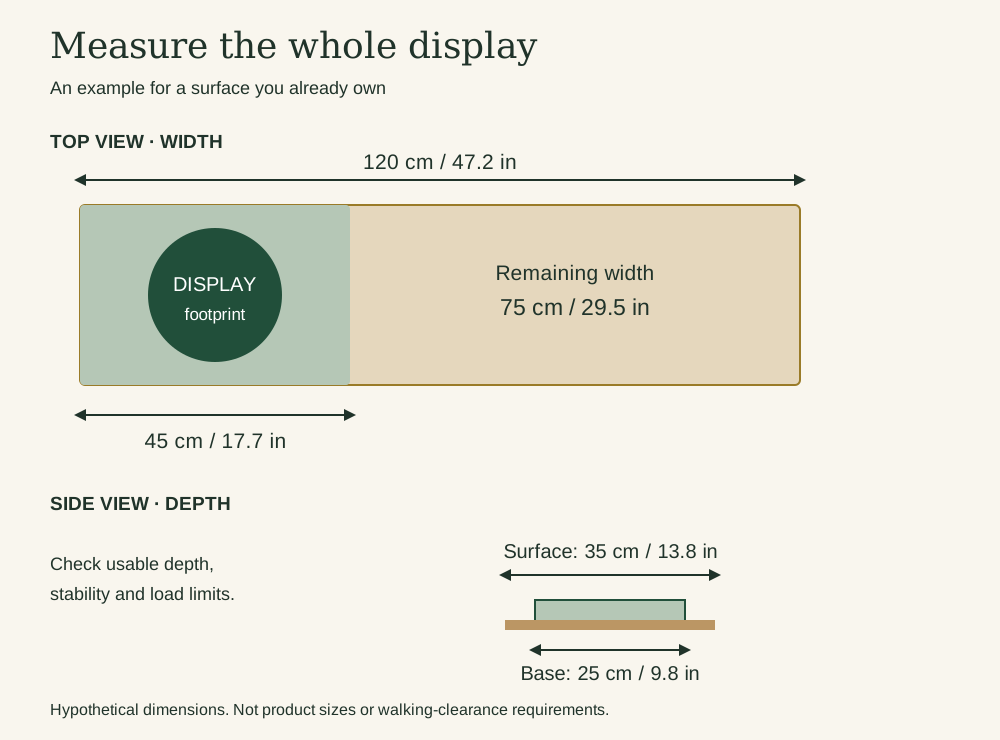
In the example, a 120 cm (47.2 in) surface minus a 45 cm (17.7 in) display leaves 75 cm (29.5 in) beside it. That subtraction says nothing about the usable depth or weight capacity. Check those separately. A 25 cm (9.8 in) base on a 35 cm (13.8 in) deep surface also needs its real shape, overhang and stability checked; it is not a universal safe-fit rule.
For a floor tree, measure its actual widest point rather than relying on the words “slim” or “pencil.” Balsam Hill's space-saving category includes narrow, flat-back and corner formats; those names describe different shapes, not one standard footprint. Check the selected model and size, its base and setup instructions.
3. Compare three ways to decorate a small home
| Format | When to consider it | What to verify |
|---|---|---|
| Narrow floor tree | You have a genuinely unused floor position that preserves movement. | Full branch width, stand, door swing, heat sources and packed size. |
| Tabletop artificial tree | A suitable existing piece of furniture can carry the display. | Base fit, total height, stability, weight and remaining everyday surface. |
| One compact surface arrangement | You want a seasonal focal point with fewer large objects. | Container footprint, access to keys or other essentials and where displaced objects will go. |
A tabletop tree frees a floor position but uses a surface. A slim tree uses less width than some full trees but can still be too large for your corner. A compact arrangement may work with objects you already own. Compare those tradeoffs before deciding that a new product solves the problem.
4. Let a few details carry the theme
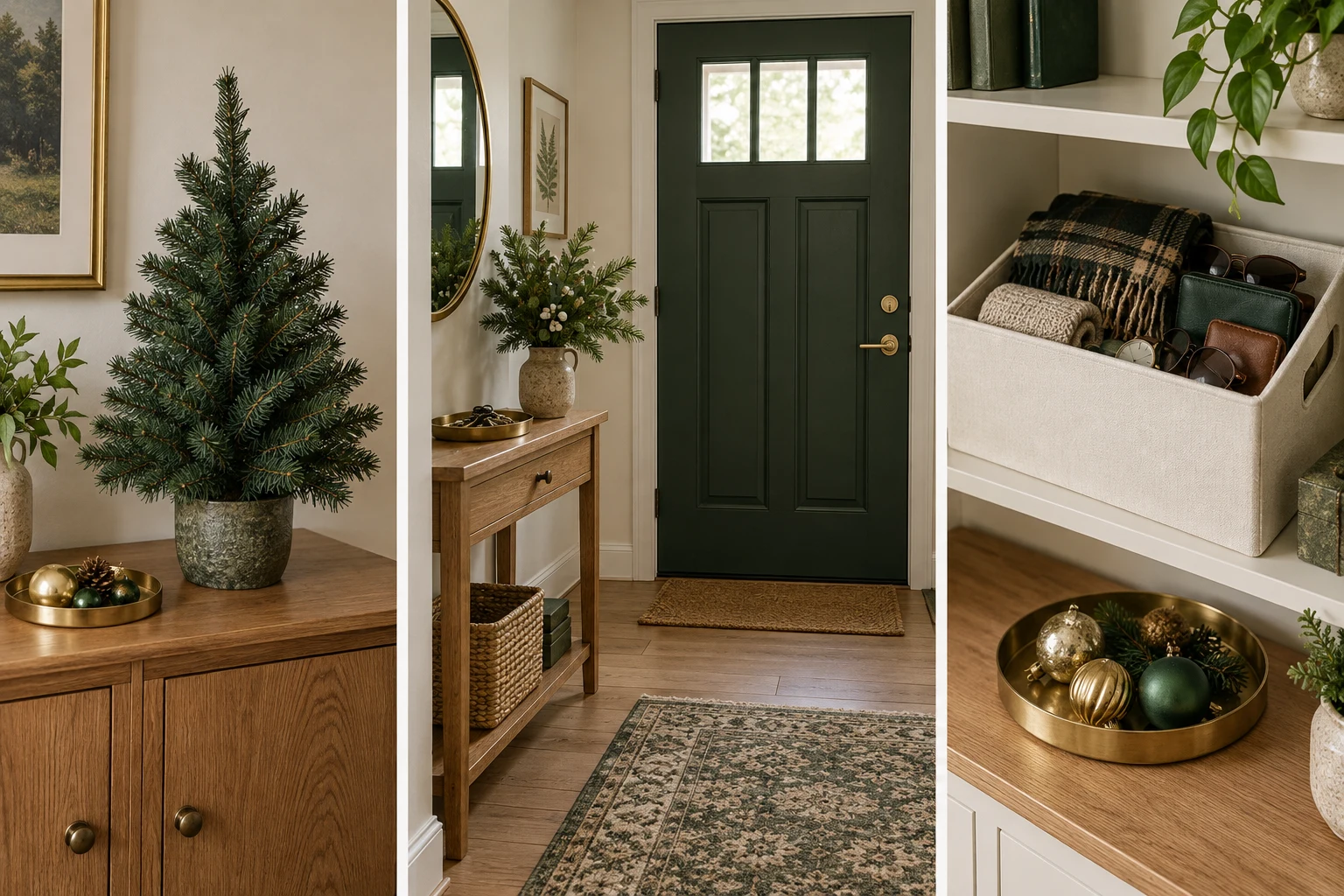
Choose one repeated colour or material and use it in a few places: a green ribbon, a small collection of gold ornaments or a textured neutral container. Group smaller pieces on a suitable tray so the display can move when the table is needed. Keep the arrangement shallow enough for the surface's normal job.
Swap rather than stack. If a seasonal arrangement takes the place of a vase and three accessories, pack those everyday objects together and label the box. Avoid moving them onto the next useful surface. Leave the key tray, switches, handles and controls accessible. For a welcoming entrance, use our holiday guest entryway plan.
Check the room from the places where you sit and stand, not only the doorway. A display that looks modest from across the room may block a sightline on the dining table. Try it during a normal meal or evening before adding another layer. For a household with children or pets, consider reach and small parts when choosing and placing decorations.
5. Check the complete purchase
Make a short list of what is missing after the trial. If the existing tray works, you may need only a different arrangement. If the tree is too wide, more ornaments will not solve the space problem. Compare the selected variant, delivery, any required base or accessories and return conditions before paying.
Your small-space checks
Checks reset when the page reloads. No fixed prices, affiliate links or product testing in this guide.
6. Plan where it goes after Christmas
Before choosing a large decoration, check its packed dimensions and your storage opening. A tree's assembled height is not the size of its largest section. Keep matching accessories identifiable, label the intended display location and take a reference photo of your finished arrangement for your own use next year.
Our tree storage bag guide, wreath diameter and depth guide, ornament organizer comparison and separate light-set storage plan cover the next checks. Keep gift-wrapping supplies in a portable wrapping station rather than permanently occupying your dining table.
Common questions
Can a small room feel festive without a floor tree?
Yes. Try one compact tabletop arrangement or a small artificial tree on suitable furniture. Keep useful surfaces available, and choose the display around your actual room rather than a target number of decorations.
Is a pencil tree always the best option?
No. The selected model's widest point, base and location still need checking. A tabletop display or a modest arrangement may fit your daily use better. We have not tested or ranked tree models here.
Do these example measurements specify a safe walking width?
No. The diagram is a surface-fit arithmetic example, not a room clearance standard. Keep exits clear and check any applicable accessibility, building and product requirements for your home.
Research and sources
The layout exercises and decorating choices are original planning aids. The following primary sources support the attributed tree guidance and format examples; they do not endorse this guide.