
Gardens & Growing
Grow Lights for Small Spaces: Which Format Fits?
Compare a standing lamp, shelf-mounted light bars and an integrated grow shelf before choosing a specific product.
Researched November 7, 2026 · Planning guidance, not hands-on product testing.
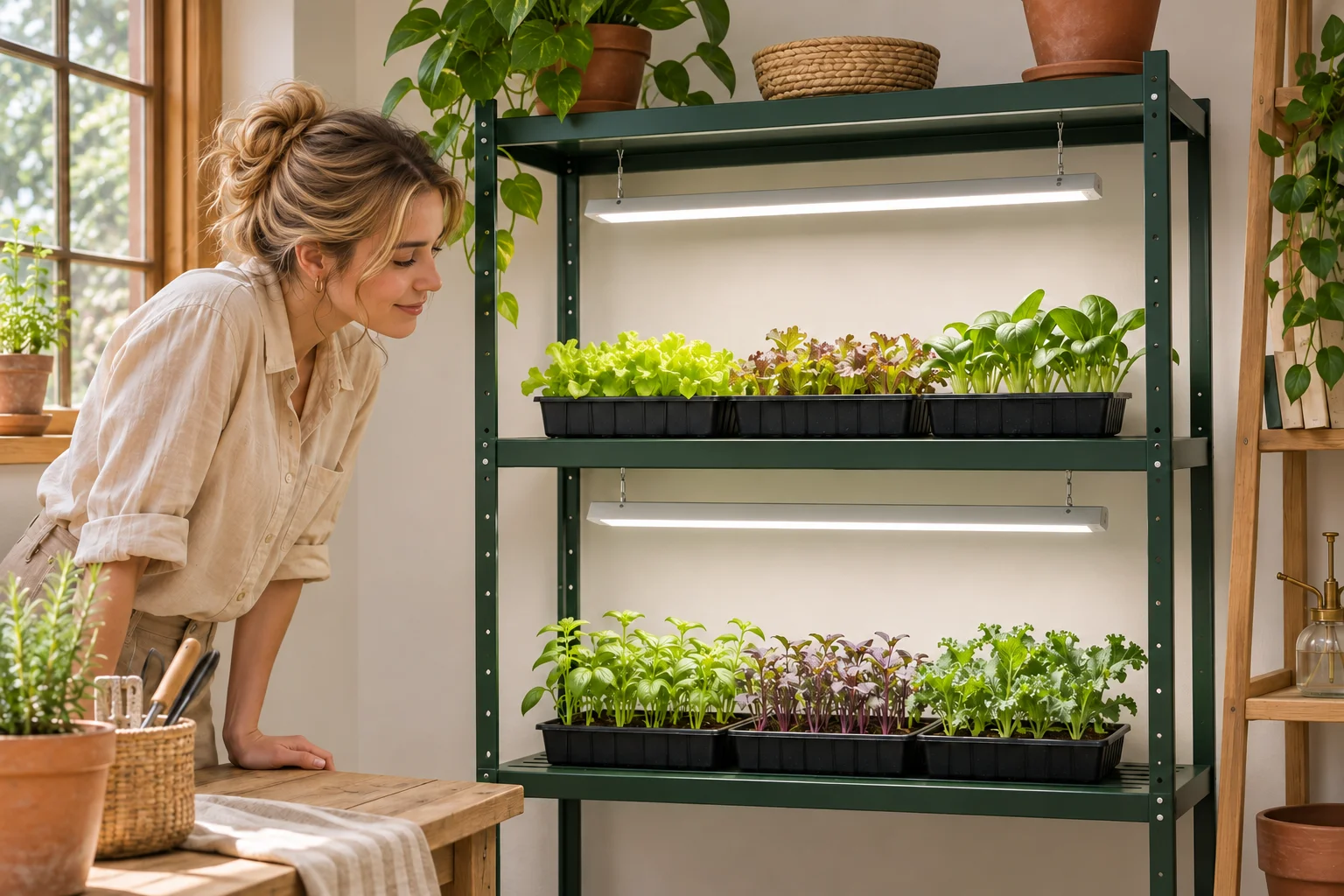
Three ways to light a small collection
| Format | Why consider it? | Trade-off to check |
|---|---|---|
| Standing plant lamp | A separate light beside an existing plant display | Base footprint, adjustability and coverage across plants of different heights |
| Shelf-mounted bars | Lighting for a defined row or tray on a suitable existing shelf | Secure mounting, fixture length, spacing and the number of bars needed |
| Integrated grow shelf | A stand and lighting system designed to be purchased together | Usable tray size, height adjustment, replacement lights and total footprint |
A standing lamp: keep the display flexible
Mark out the base and check that the lamp will not obstruct a walkway. Ask the seller how the light is distributed at the intended height. One tall plant and several shorter pots may need a different arrangement from a flat tray.
Shelf bars: build around the trays
Measure the shelf interior and check the mounting method before ordering. A bar that fits the outside width of a shelf can still conflict with its uprights. Confirm whether brackets, suspension parts, a timer and a power supply are included.
An integrated shelf: compare the complete package
Check the usable shelf dimensions rather than the headline footprint. Can the lighting move as the plants grow? Can a worn light be replaced independently? A more expensive complete setup may suit you better if it removes compatibility questions, but verify what the package actually includes.
Look beyond watts and “full spectrum”
Watts describe electricity use, not the amount of useful light reaching every plant. PPFD describes plant-relevant light arriving at an area; distance and coverage matter. Ask for measurements at the intended canopy height, including the edges of the growing area. Source: Iowa State University Extension — supplemental lighting considerations.
A specification without the measurement distance is hard to compare. Ask whether a coverage claim is intended for foliage maintenance, seedlings or another growing goal. Do not assume two products with the same wattage perform identically.
Choose a timer schedule around the plants and their existing daylight. A built-in timer is convenient, but its available settings should match your plan; the longest setting is not automatically the best one.
Make a physical fit check
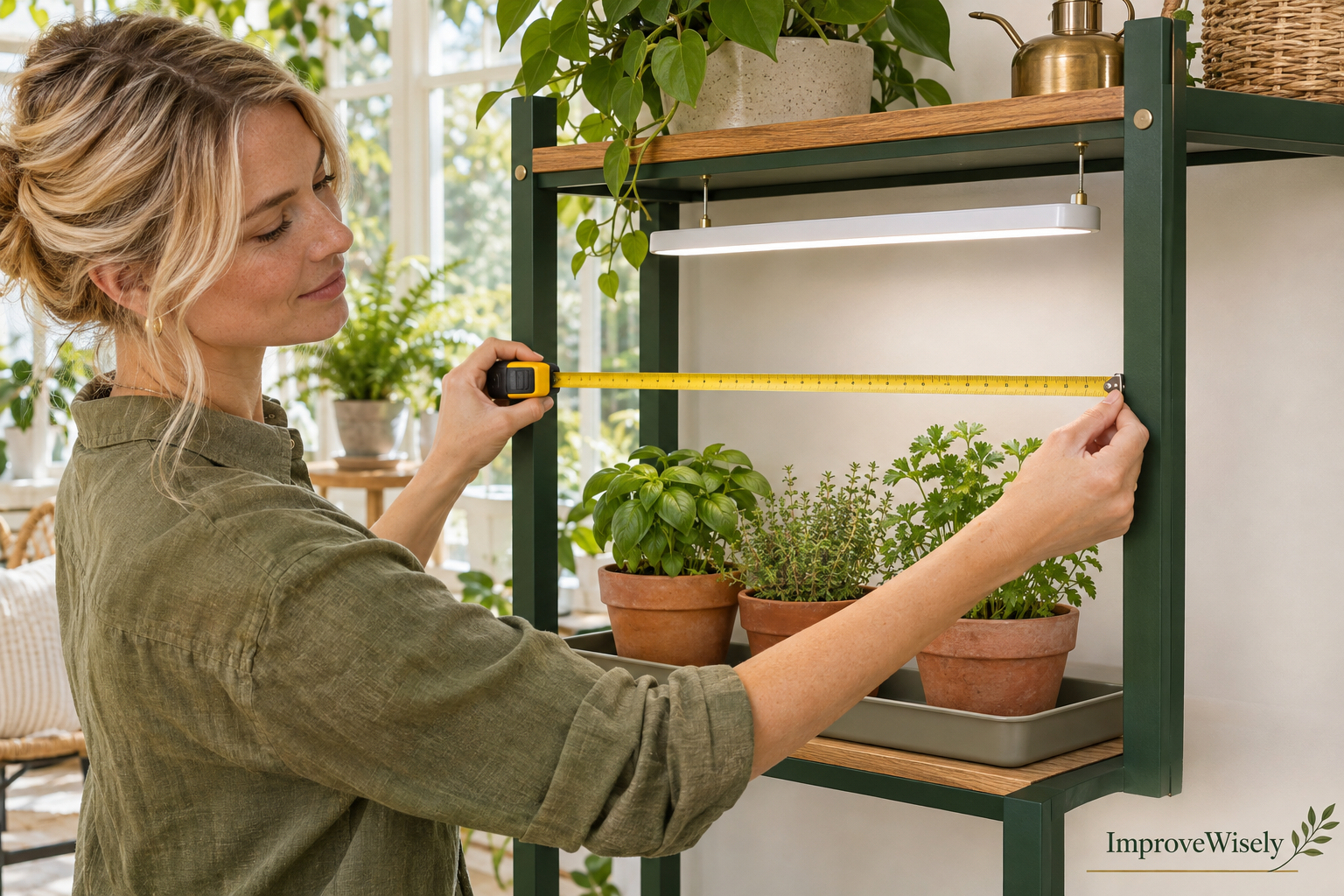
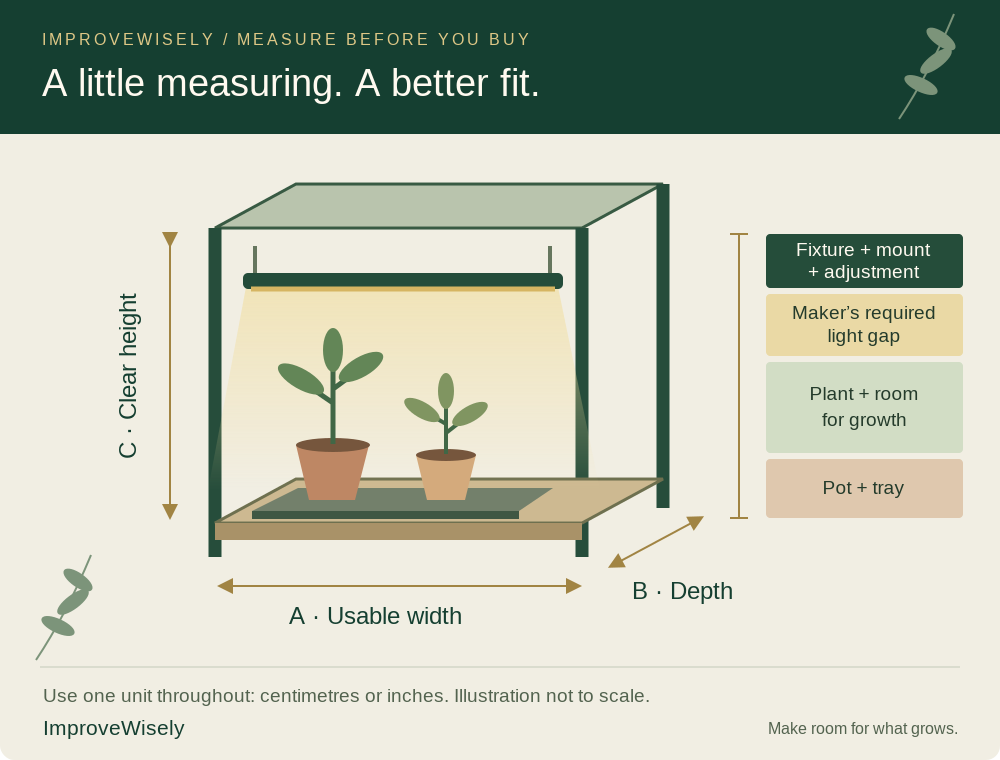
- A · Measure inside widthMeasure between uprights. Allow for connectors and brackets, not just the length of the light bar.
- B · Include the full trayMeasure front to back, including tray rims. Check that the tray is supported and you can remove it for watering.
- C · Add the height stackInclude pot and tray, the growing plant, the maker’s required light gap, and the fixture with its mounting hardware.
Write your measurements in centimetres or inches and use the same unit throughout. A shelf can fit the pots yet leave too little room to raise the lights as the plants grow.
Measure the tallest plant in its pot and leave room for its expected growth. Work through the full stack: pot, plant, recommended light gap and fixture. Check that adjustment does not require removing every pot.
Use trays to manage watering and follow the equipment instructions for moisture exposure, mounting and power connections. Keep water away from electrical components. Have new electrical work assessed by a qualified professional.
Choose with confidence
Your pre-purchase checklist
Use the same checks for every model on your shortlist. A checked box records your review; it is not a product certification.
Tick each item as you check it.
Small space · Clear numbers
What will the lights cost to run?
Enter the combined actual input watts of all lights you will run together. For two 20 W bars, enter 40 W. Do not use a “watt-equivalent” marketing figure.
The starting values are an example, not a typical tariff or recommended lighting schedule. Formula: watts ÷ 1,000 × hours/day × days = kWh; kWh × your rate = cost. At 40 W, 12 hours/day and 30 days, use is 14.4 kWh.
This estimates lighting electricity only, excluding equipment, heating, fans, fixed utility fees and any taxes or charges not included in your rate. Time-of-use rates and dimming can change the total; use a representative rate and measured input power where available. The calculation runs in your browser; these form entries are not sent by this calculator.
What to compare next
Once you have chosen the format, shortlist products sold in your country and collect their dimensions, coverage data, mounting instructions and current price. Use the same questions for each model. This guide compares formats; it does not rank untested products or depict a named model.
If you are still deciding where the plants should live, start with our three winter-garden options. For storing trays and hand tools between tasks, see garden tool organization.
Sources and scope
The explanation of wattage, canopy intensity and measurement distance follows the Iowa State University lighting guide. The format comparison, purchasing questions and dimensional checks are original planning suggestions. For choosing plants around available light, see University of Minnesota Extension. Reviewed November 7, 2026.