
Gardens & Growing · Choose before you buy
Seed-Starting Kits for Small Spaces: What Do You Actually Need?
Choose seed trays, pots, lights and optional accessories around your available space, local sowing plan and the number of plants you want.
Researched November 7, 2026 · Independent planning guide, not hands-on product testing.
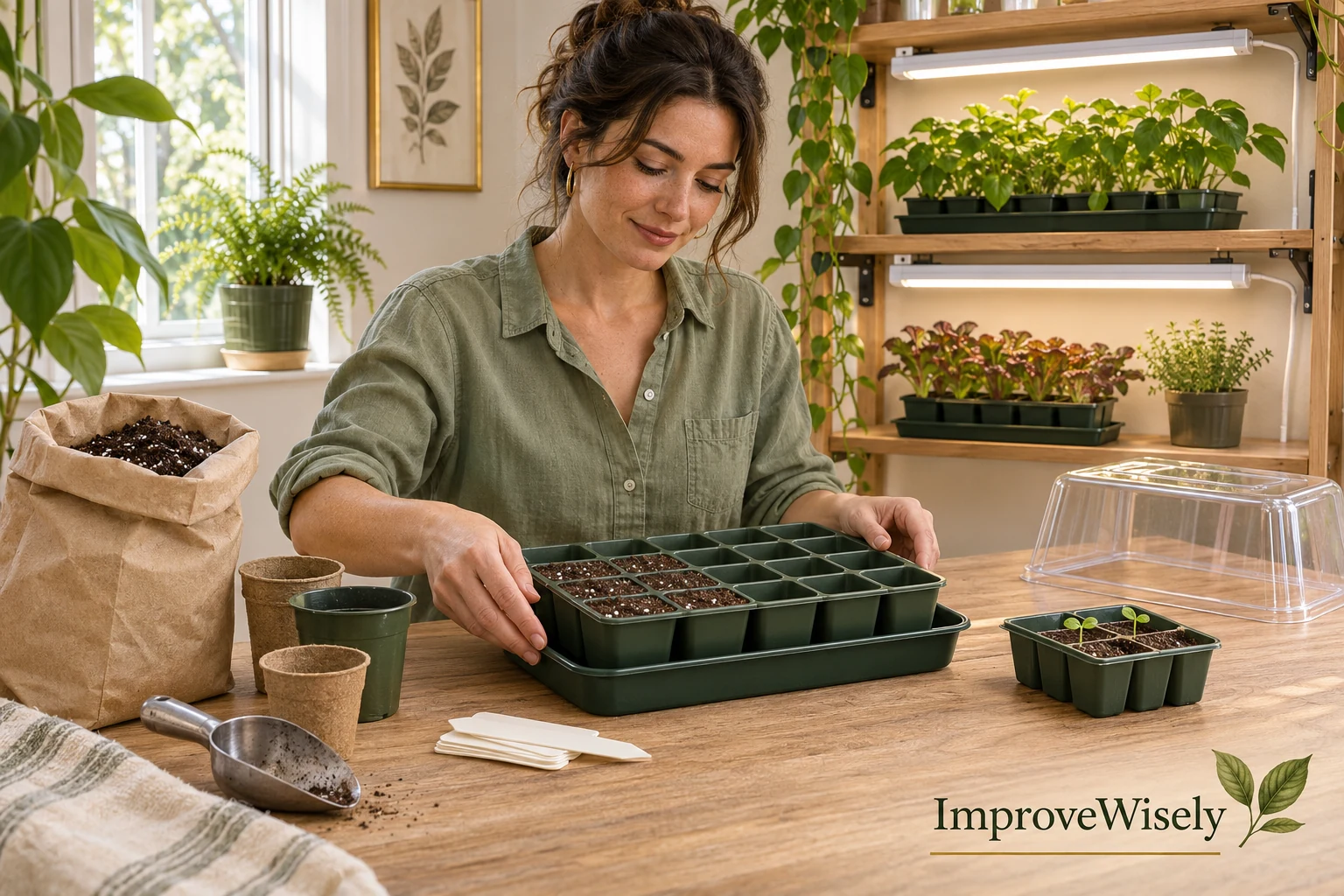
Choose the format before the bundle
| Format | Why consider it? | Check before paying |
|---|---|---|
| Divided cell tray | Organizes many seedlings in a compact area. | Cell depth, drainage, durability and how easily you can remove a root ball. |
| Individual small pots | Lets you move or space plants separately. | How many fit in the catch tray and how much space they need later. |
| Integrated starter kit | May simplify matching containers and accessories. | Exactly what is included, whether lights adjust and whether parts can be replaced. |
A high cell count is not automatically good value. If you need only a few plants, a smaller reusable setup can leave more space for growth. If you already own suitable containers, check their condition and drainage before replacing them.
Plan sowing from the seed packet and your local planting conditions. “Start indoors now” is not a universal calendar instruction: crops, climates and intended growing locations differ. Leave room in your plan for moving seedlings into larger pots and preparing outdoor-bound plants for their eventual move.
Two trays can have two different jobs
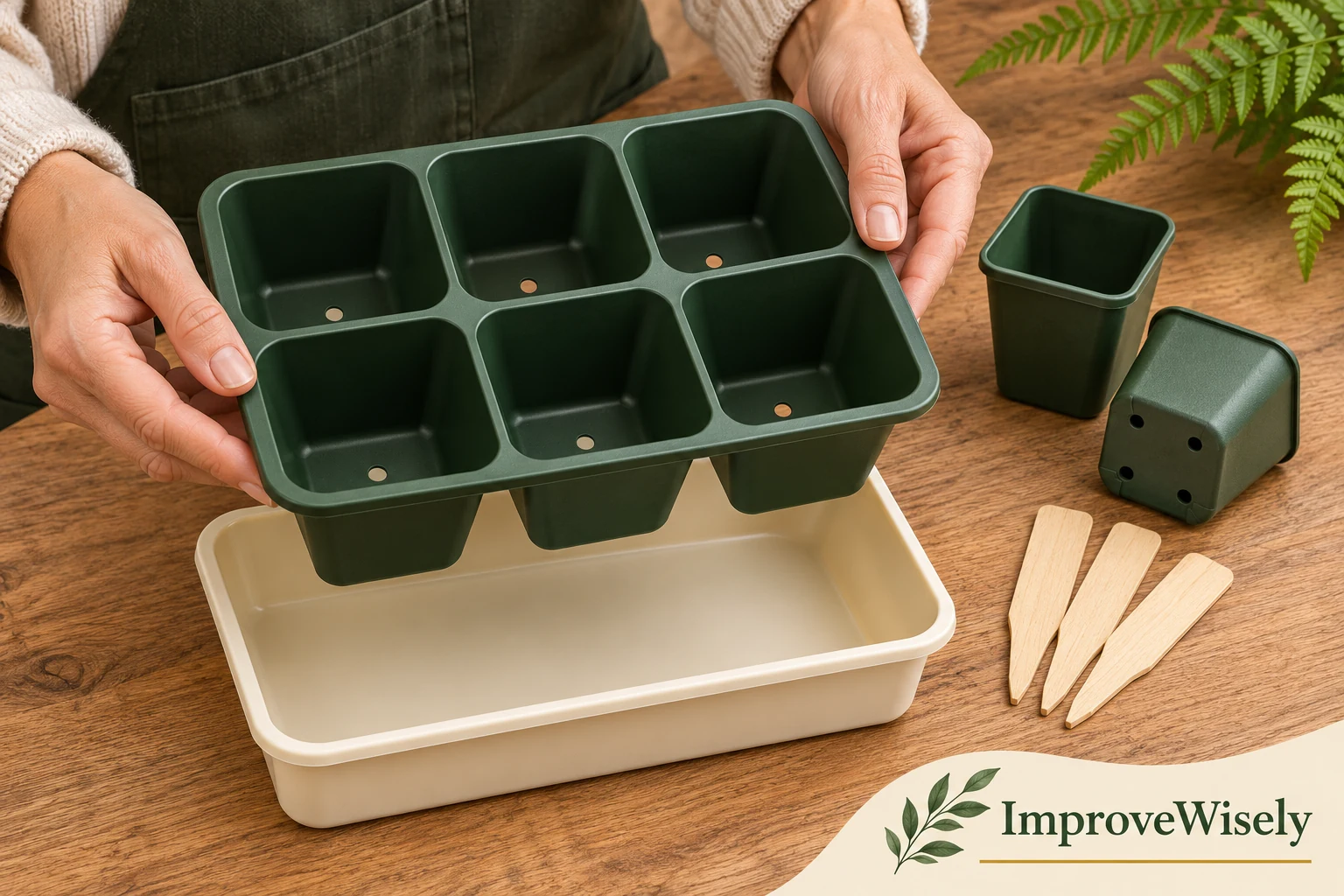
The growing container needs drainage. The solid tray underneath protects the surface and can support watering from below. Confirm which layer is perforated; similarly named trays can serve different purposes.
University of Maryland Extension’s container guide recommends clean containers with good drainage and explains the difference between divided inserts and flats. It also recommends suitable soilless growing media rather than garden soil. A costly specialty label is not the only criterion: match the texture and use to your seeds, especially very small ones.
Check the complete outside dimensions, including rims. A tray described by a common size name may still conflict with shelf uprights. Leave enough room to lift it level, inspect drainage and empty collected water. Follow the growing instructions rather than leaving seedlings permanently sitting in water.
Buy accessories for a specific job
Lighting: check usable coverage and adjustment
Your available daylight and growing location determine whether supplemental lighting is needed. Compare coverage over the entire tray at the specified distance, then check how you will raise the fixture as plants grow. A bright-looking centre does not establish that the edges receive enough light. Our grow-light format guide explains the specifications and includes a running-cost calculator.
A clear dome: a germination aid
A cover can help retain moisture during germination, but it is not a permanent lid for a growing collection. Follow the seed and kit instructions, inspect frequently and adjust or remove the cover as seedlings emerge. Utah State University’s germination guide describes monitoring moisture and germination conditions; different seeds have different requirements.
A heat mat: optional, not an automatic upgrade
Compare the seed’s germination requirements with the conditions in your growing area. If supplementary heat is needed, check temperature control, monitoring and the maker’s instructions for use around trays. Do not copy one temperature setting to every crop or assume a mat is needed throughout growth.
A starter shopping list with fewer surprises
- Start with: chosen seeds, suitable growing containers, a catch tray, appropriate growing mix and labels.
- Add when needed: suitable lighting, mounting parts and timer; a compatible germination cover; controlled heat for seeds that need it.
- Allow for later: larger pots, more growing space and plant-specific feeding or care supplies.
Compare kits using the number of plants you actually intend to raise. Record the current delivered price, missing accessories and likely reusable parts. A complete lighted stand may be worthwhile when it solves fit and mounting together; a cheaper tray bundle can be better when you already have the rest.
The University of Minnesota’s indoor seed-starting guide recommends planning a suitable location and allowing space for plants as they develop. Keep the setup accessible for regular checks, away from household traffic and unsuitable drafts or heat sources.
Check the whole growing cycle
Sources and scope
Growing context: University of Maryland, Utah State University and University of Minnesota Extension, linked above. The buying framework is original editorial guidance. No named starter kit was tested; the images illustrate container choices and preparation. Reviewed November 7, 2026.