
Gardens & Growing
Small-Space Winter Gardens: Three Ways to Grow
An indoor plant corner, an existing sunroom or a small greenhouse? Start with the plants you want to keep—and the space you can realistically manage.
Researched November 7, 2026 · Planning guidance, not hands-on product testing.
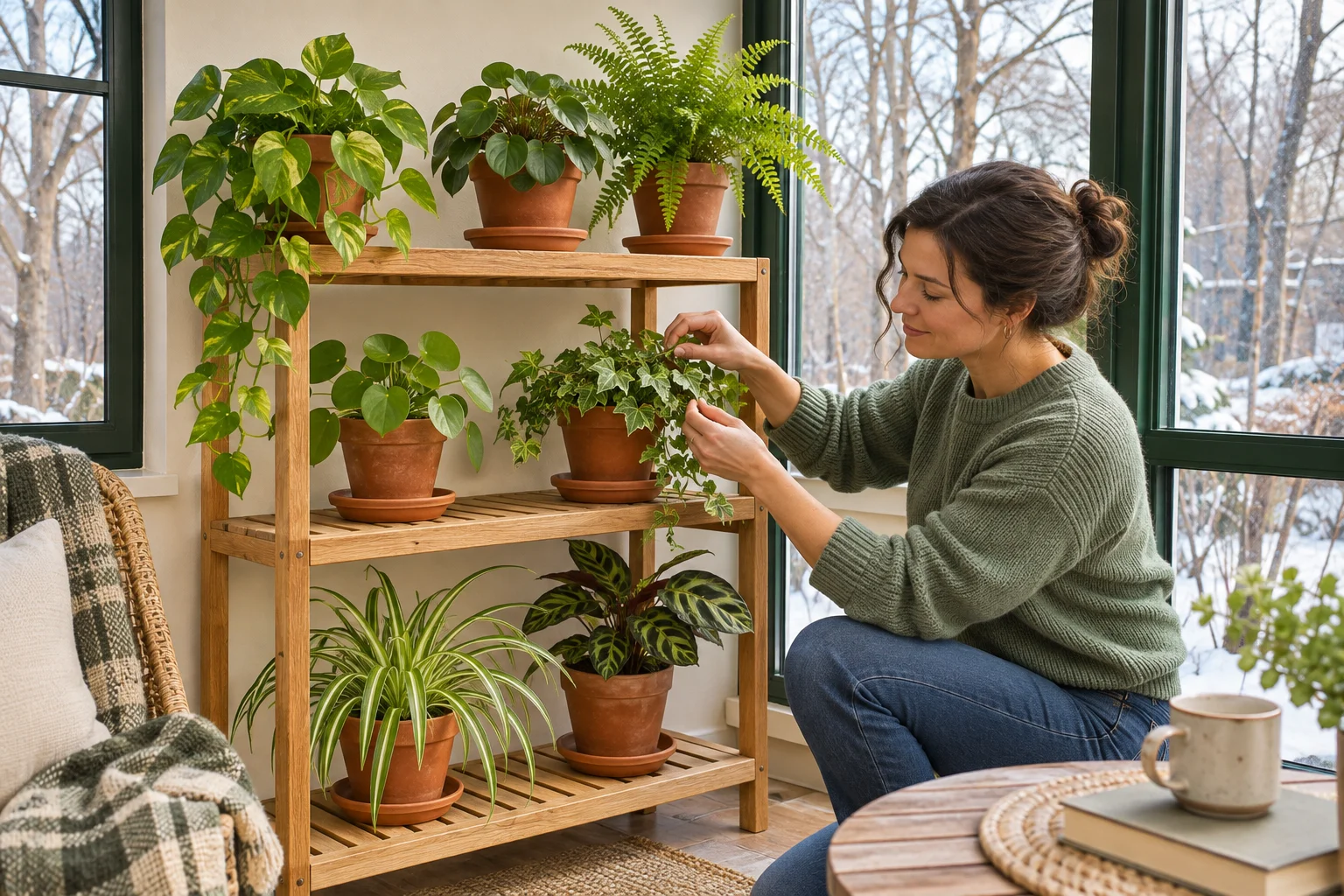
Which kind of winter garden fits?
A room for enjoying greenery and a space for producing seedlings are different purchases. Use the comparison below to decide what you are actually asking the space to do.
| Option | A useful starting point for | What to verify before buying |
|---|---|---|
| Indoor shelf or plant corner | A small collection within an existing room | Usable shelf space, light at the leaves, water protection and comfortable access |
| Existing sunroom or enclosed porch | A larger plant display in a space you already have | Night-time conditions, sunlight, moisture management and whether the room is actually suitable year-round |
| Small greenhouse | A dedicated growing area with a defined crop and seasonal plan | Local climate, model-specific foundation and anchoring, snow/wind suitability, ventilation, heating needs and services |
Purpose-designed deep-winter greenhouses can use passive solar strategies and cold-tolerant crops. That does not make an ordinary greenhouse kit equivalent: the structure and growing plan matter. Source: University of Minnesota Extension — deep winter greenhouses.
Choose the plants before the equipment
Write down whether you want to maintain foliage plants, start seedlings or grow something to harvest. Then check the requirements of those specific plants. A fixture bought for one small foliage display may not suit a tray of seedlings.
Match the plants to the available light; supplemental lighting can make up a shortfall. The amount and duration of natural light both matter. Source: University of Minnesota Extension — indoor lighting.
For the next purchase decision, use our comparison of standing lights, shelf bars and integrated grow shelves.
Measure usable space—not just the shelf
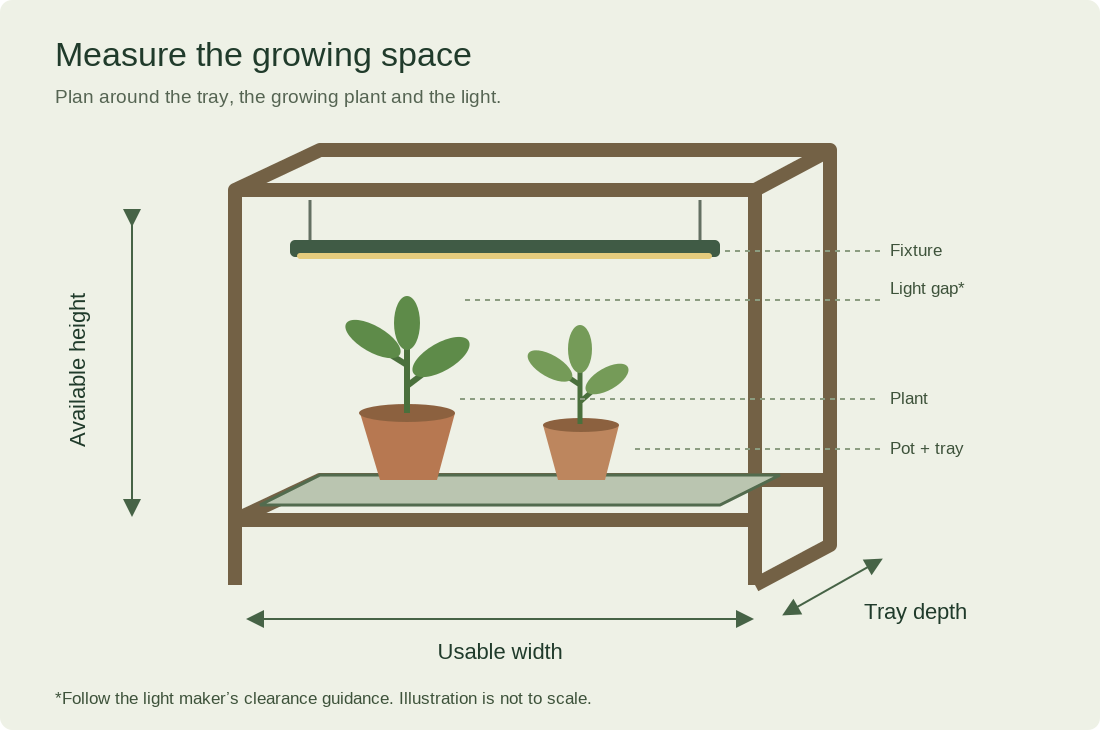
- Width and depth: measure the usable shelf surface, then the outside of the trays and pots. Include handles and protruding rims.
- Height: allow for the pot, the growing plant, the light fixture and the manufacturer’s specified gap above the canopy.
- Access: rehearse removing a tray and reaching the back row. Keep door swings and walkways clear.
- Support: check the shelf’s permitted load and setup instructions, accounting for wet pots and trays.
Budget for the whole setup
Separate one-time purchases from running costs. Compare the delivered cost of the stand or structure, trays, lights, timers and any required installation. Check replacement parts and warranty coverage for your country before choosing a seller.
60 W ÷ 1,000 × 12 hours/day × 30 days = 21.6 kWh/month.
At an illustrative electricity rate of $0.20/kWh, that is $4.32/month. Use your own currency and applicable rate. This excludes heating, fans, taxes and fixed utility charges; it is not a greenhouse operating-cost estimate.
Ask for heating estimates based on the actual space and local winter conditions. Do not use the light’s electricity calculation to predict the cost of keeping a glass room warm.
Before you place an order
Use this checklist for your first setup. Selections are not saved between visits.
How we prepared this guide
The space comparison, measuring routine and cost example are original planning aids. The plant-light and deep-winter greenhouse notes draw on the university sources linked above. Images illustrate ideas; they do not establish a product’s performance or the suitability of a particular room.