
Gardens & Growing · Choose before you buy
Plant Cabinet vs Open Shelf: Which Fits Your Indoor Garden?
Compare plant cabinets and open shelves by access, humidity, usable space, maintenance and the complete cost before buying.
Researched November 7, 2026 · Independent planning guide, not hands-on product testing.
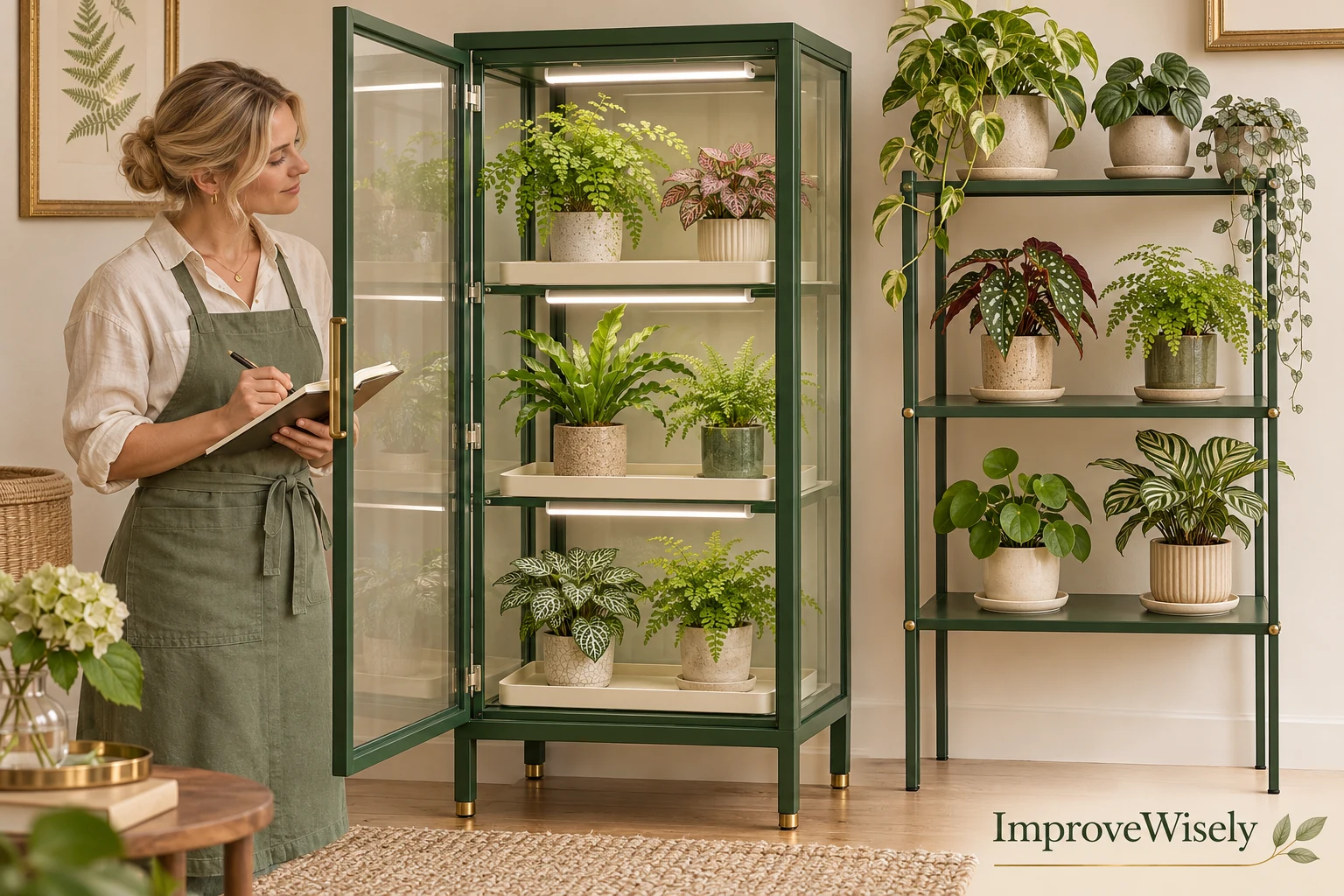
Cabinet vs open shelf: what changes?
| Decision | Enclosed plant cabinet | Open plant shelf |
|---|---|---|
| Everyday access | Check the door opening and whether trays can slide out without tilting. | Pots are usually easier to reach, but check upper shelves and uprights. |
| Room conditions | Conditions inside may differ from the room; measure rather than assume. | Plants remain more exposed to room air, heating and drafts. |
| Plant mix | Group plants with compatible needs; enclosure is not a reason to combine every plant. | Easier to separate collections, though each position still needs suitable light. |
| Cleaning | Include glass, corners, hinges and any vents in your routine. | Check trays, shelf surfaces and the floor beneath. |
| Future changes | Door size, fixed shelves and equipment access can limit expansion. | Often easier to rearrange, depending on the shelf design. |
| Best reason to choose | You want an enclosed display and will observe and maintain its conditions. | You want accessible growing space and your plants suit the room. |
Our starting recommendation: keep healthy plants on an accessible open shelf unless you can identify a need that an enclosure will address. Choose a cabinet for a defined collection and routine, not simply because it looks more professional.
Humidity: measure first, then choose
Write down which plants you intend to keep and what conditions they need. A fern collection and a succulent collection should not inherit one humidity target. University of Maryland Extension explains that indoor plants differ in their humidity needs and that heating, cooling and drafts affect their surroundings.
A monitor measures conditions; it does not regulate them. If a seller advertises “humidity control,” ask which device controls it, how it is adjusted and what maintenance it requires. Compare the conditions at plant level over your normal light and watering cycle.
A fan and ventilation are different checks. Ask how air exchanges with the room as well as how it circulates inside. Do not assume a small fan alone removes accumulated moisture. Persistent condensation, wet surfaces or deteriorating plants are reasons to reassess the arrangement, not add another accessory without diagnosis.
The RHS terrarium guide distinguishes closed, moisture-retaining displays from open arrangements and warns about direct sun and overheating. A furniture cabinet containing separate pots is a different system: do not assume it behaves like a sealed terrarium or can stay shut indefinitely.
Measure the working space, not just the glass box
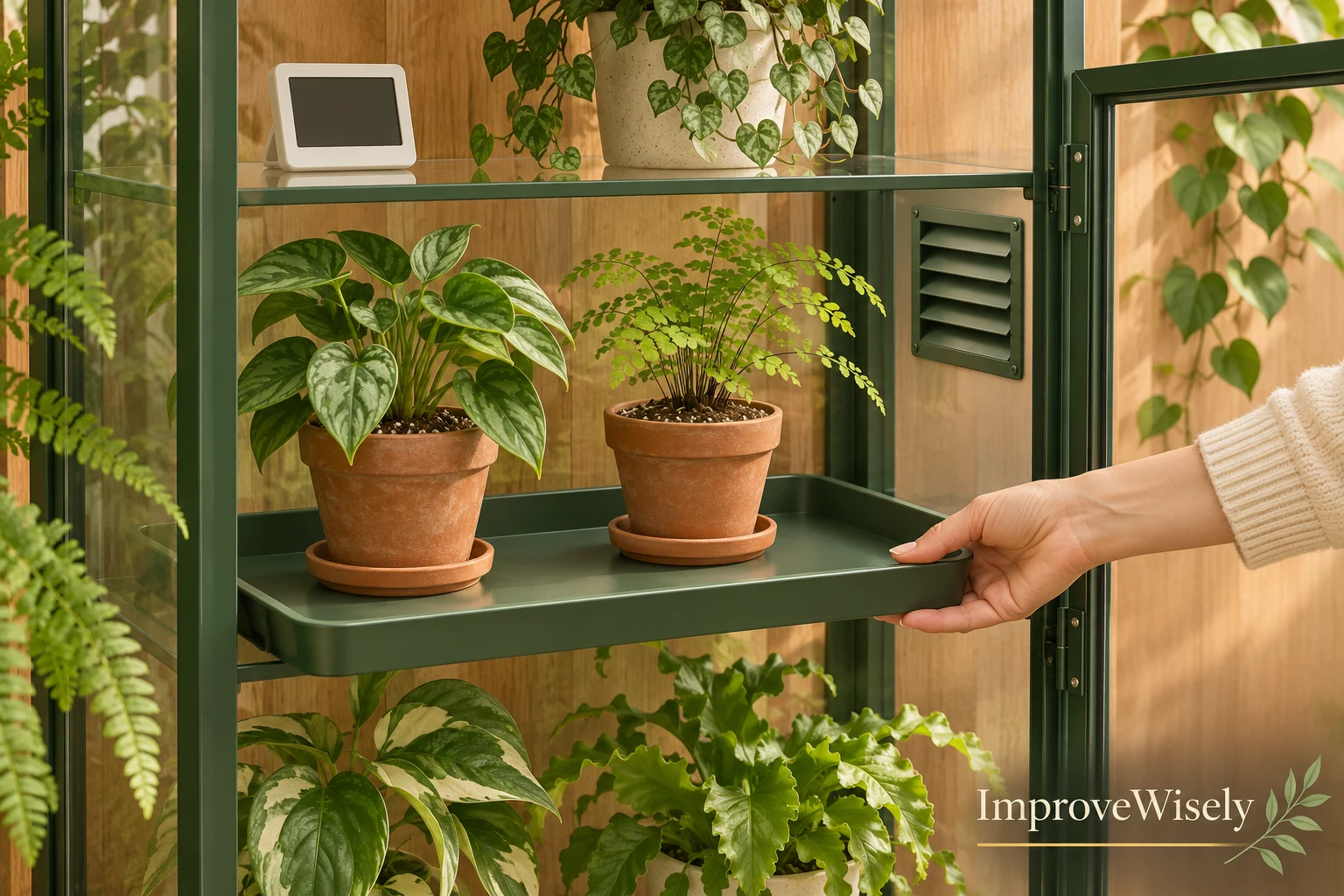
- Inside width and depth: measure between obstructions, including hinges and brackets. Include tray rims and pot saucers.
- Door clearance: check the opening with the door at the angle available in your room. Leave a clear place to set down a wet tray.
- Height stack: add tray, pot, expected plant height, the light maker’s required gap and the fixture with its mounting hardware.
- Load and surfaces: check the manufacturer’s shelf rating for the complete wet load. Confirm the materials and electrical equipment suit their intended moisture exposure.
Use our illustrated grow-shelf measuring guide for the height stack. Choose equipment with suitable mounting and location instructions; this guide is not a wiring or cabinet-conversion tutorial.
Compare the complete cost of the same plant collection
Put both options on one shopping list: frame or cabinet, trays, lights, mounting parts, timer, delivery and any required monitoring or climate equipment. Add replacement lights and access to spare trays. An enclosure that needs several additional purchases may cost more than its headline price suggests.
For each option, record delivered equipment total + required extras + estimated running costs. Use the grow-light electricity calculator for lighting; calculate fans or other equipment separately using actual input power and operating time. Check current prices at purchase time rather than relying on an old offer.
Worth paying more for: dimensions that fit your collection, removable trays, accessible controls and replaceable parts. Worth questioning: paying for appearance while basic access, moisture suitability or replacement support remains unclear.
Your cabinet or shelf shortlist
Sources and scope
Plant-condition context: University of Maryland Extension and RHS, linked above. The purchasing comparison and measurement checklist are ImproveWisely’s planning framework. Images are editorial concepts; no cabinet or shelf was tested or ranked. Reviewed November 7, 2026.